

The future is coming – fast.
Sooner or later, and probably sooner, we'll be working and playing alongside humanoid robots, getting packages (and people) delivered by low-altitude drones, being driven around in robotaxis – and getting all this tech powered by green energy.
How does all this work? Well, that's what we're here to explain.
Welcome to Future Mode.


Humanoid robots







If you close your eyes and think of a robot, what do you see?
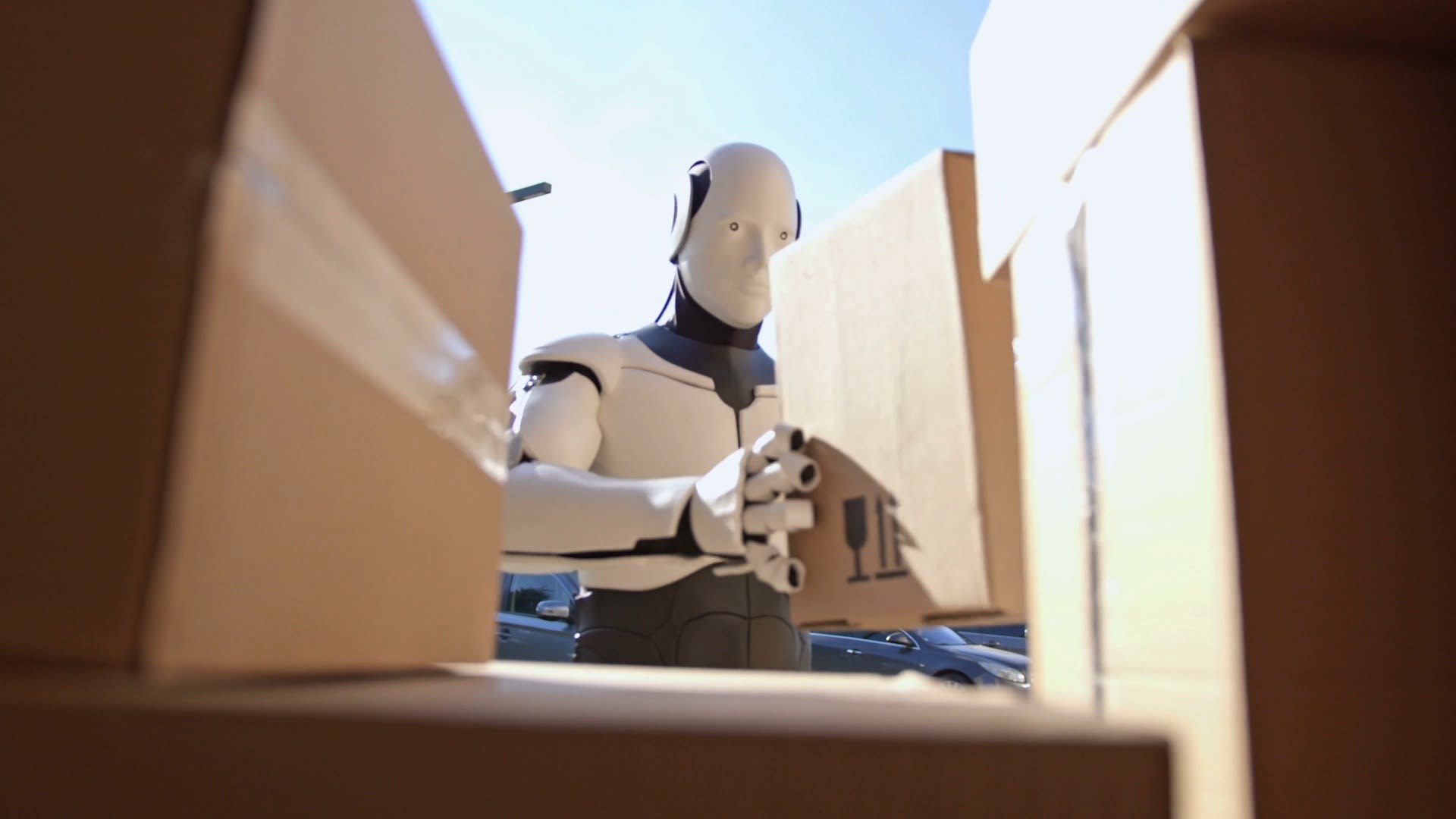
It's very likely that you will think of something shaped like a human. You likely won't imagine a disembodied arm, assembling a car on a factory production line; you'll probably have pictured something human-sized, human-shaped, idealized and shiny.
There's nothing wrong with that – the humanoid robot has been discussed for centuries, even millennia. The Liezi, a Daoist text based on the writings of the philosopher Lie Yokou at least four centuries BCE, tells of a humanoid automaton impressing a king of the Zhou dynasty who lived around 950 BCE.
So it's perhaps fitting that modern-day China leads the way towards the actualization of an ancient human dream…
Welcome to the robot show
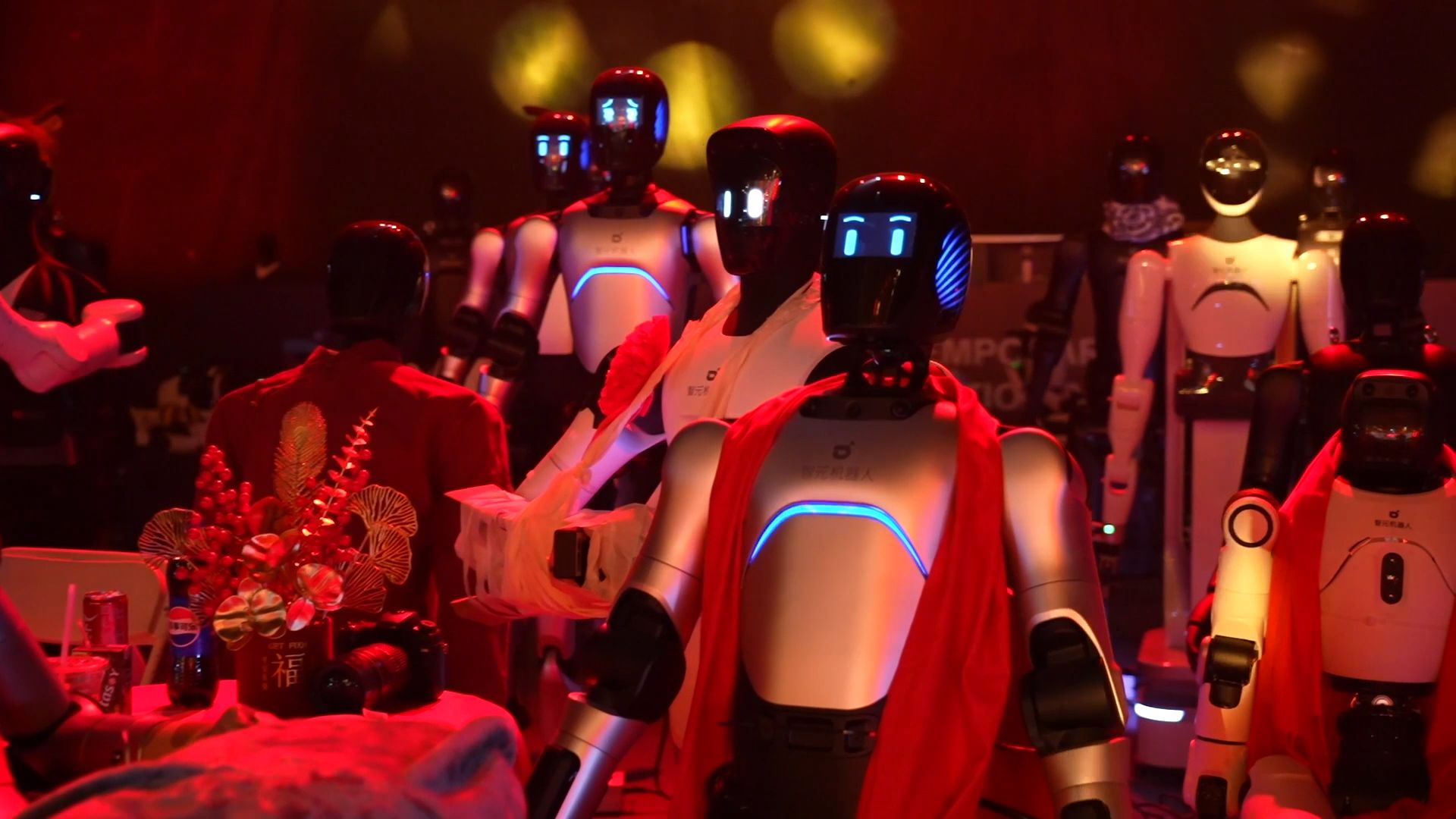
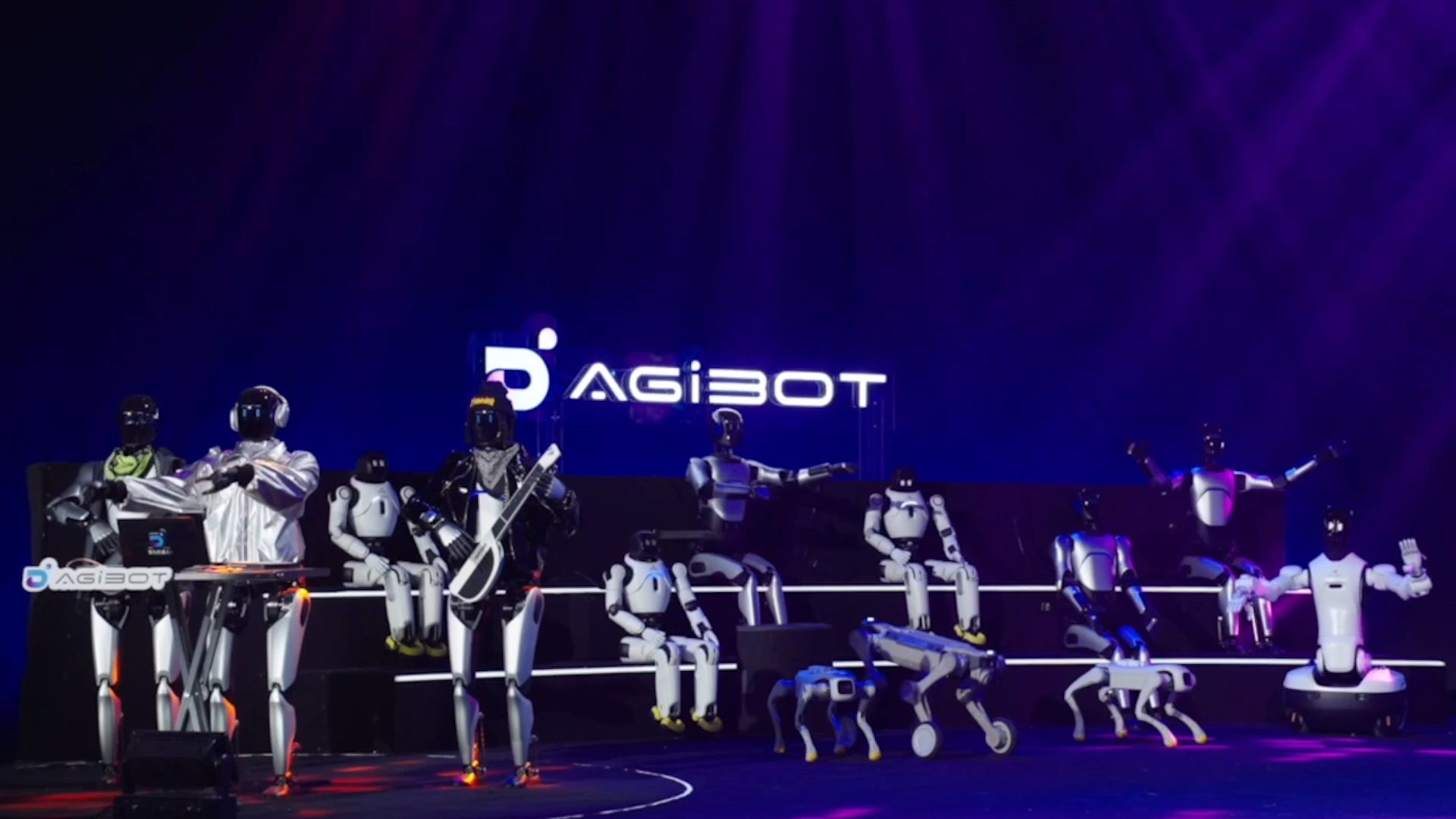
Picture a gala where the performers are all robots – and so are the audience. Except this time, it's not a thought experiment – it actually happened.
"I might be the only biological entity in the room," says CGTN's Wang Tianyu. He's attending a Shanghai event performed entirely by humanoid robots… and the audience are all humanoid robots too.
"Some are tall and some are small," he says, but "they all have one thing in common: they're humanoid."

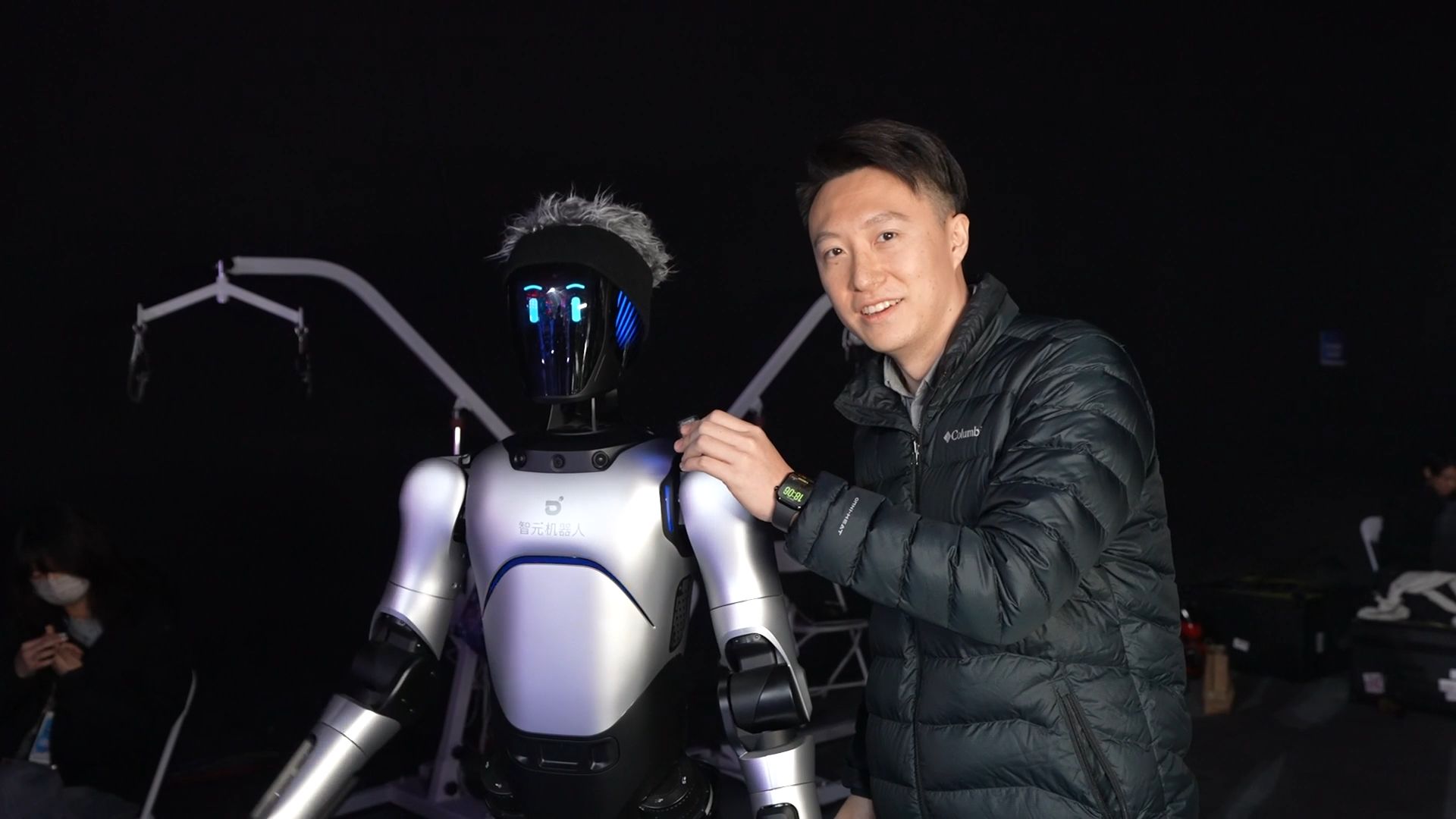
CGTN's Tianyu helps out a new friend.
CGTN's Tianyu helps out a new friend.
The "Robot Gala" was organized by major Chinese robot maker AgiBot. And as you'd expect, it's a stunning showcase of these human-like machines' motion control, computer vision and creativity.
And the fact they're the stars of the show may be a harbinger of tomorrow's entertainment industry.
"Usually, robots are just there to support the show. This time, we want them to be the stars."
"Usually, robots are just there to support the show," says Li Jiayu, AgiBot's Director of Solutions. "This time, we want them to be the stars."
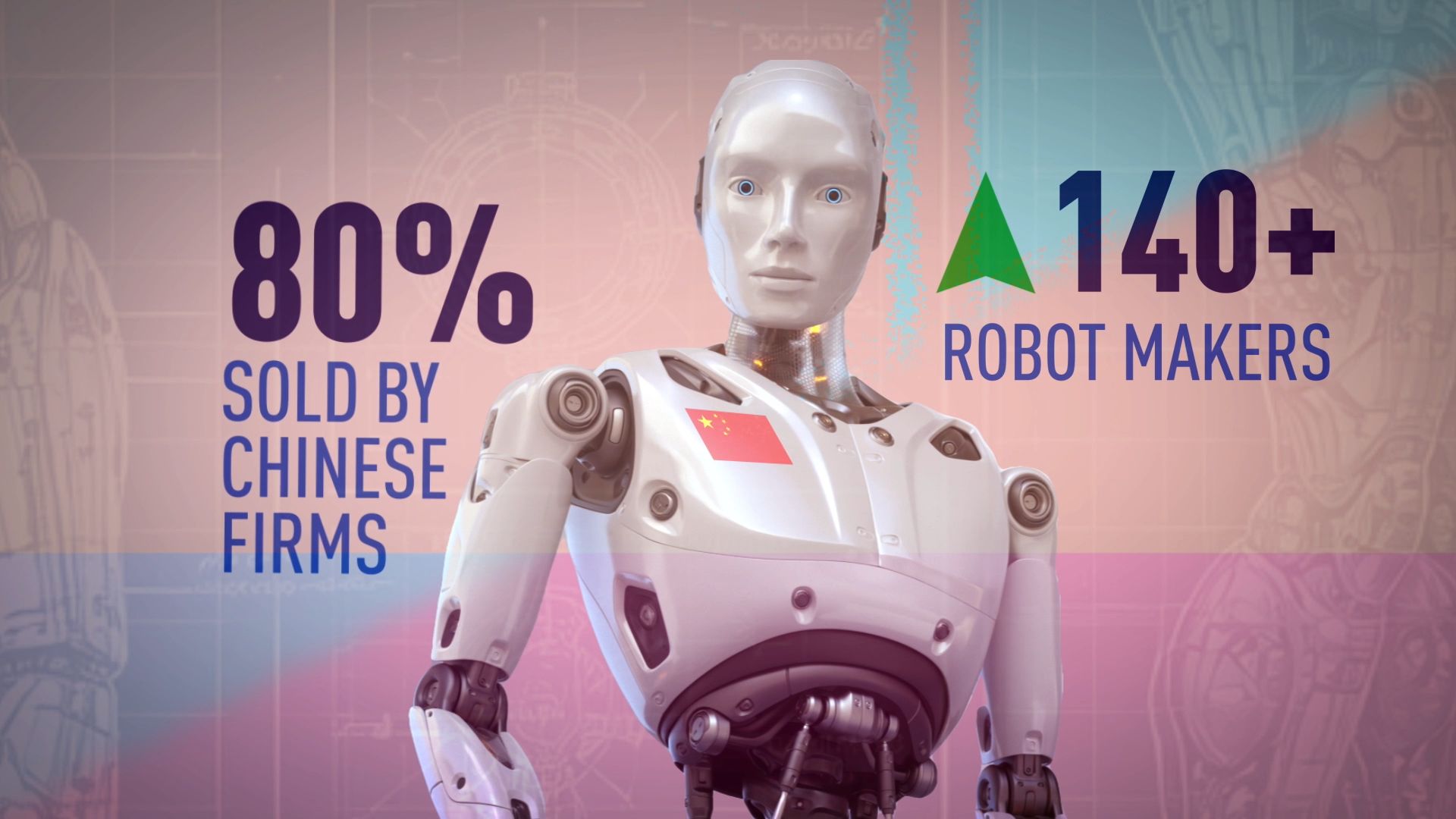
But behind the laughter and the LEDs is China's dominance in the race for embodied AI. In 2025, eight out of ten humanoid robots sold were from Chinese vendors – and it's a competitive market, with 140 Chinese robot-makers in the country vying to create the best products.
From the dance floor to the factory floor
Of course, robots aren't only intended for use in the entertainment and leisure sector. We humans have long wanted to put them to work for us.
Indeed, the very word 'robot' comes from this idea of palming off repetitive or boring work onto our automated cousins. (The concept was previously encapsulated in English by the word 'automaton'.)
It comes from a 1920 sci-fi play by Czech writer Karel Capek; in many Slavic languages, robota translates to 'work' or 'labor' – and in Czech, it specifically refers to forced labor, as formerly imposed by feudal overlords, a meaning more recently developed to include any repetitive drudgery.
"Robotics is the opportunity that would bridge the labor gaps."
So it's no surprise that some of the earliest 'robots' to go into production were for industrial purposes, with 1930s US patents filed for machines to perform simple repetitive movements like lifting, pulling and switching.
And although the 1950s sci-fi boom promised a future of humanoid robots performing the housework while we humans lounged around, the first actual widespread application of robots was on automotive industry assembly lines, starting in the 1960s with die-casting and welding, but gradually expanding into other functions.
But to assess the current cutting edge of factory-floor robotics, CGTN's Michael Marillier visited Extend Robotics, just outside London.
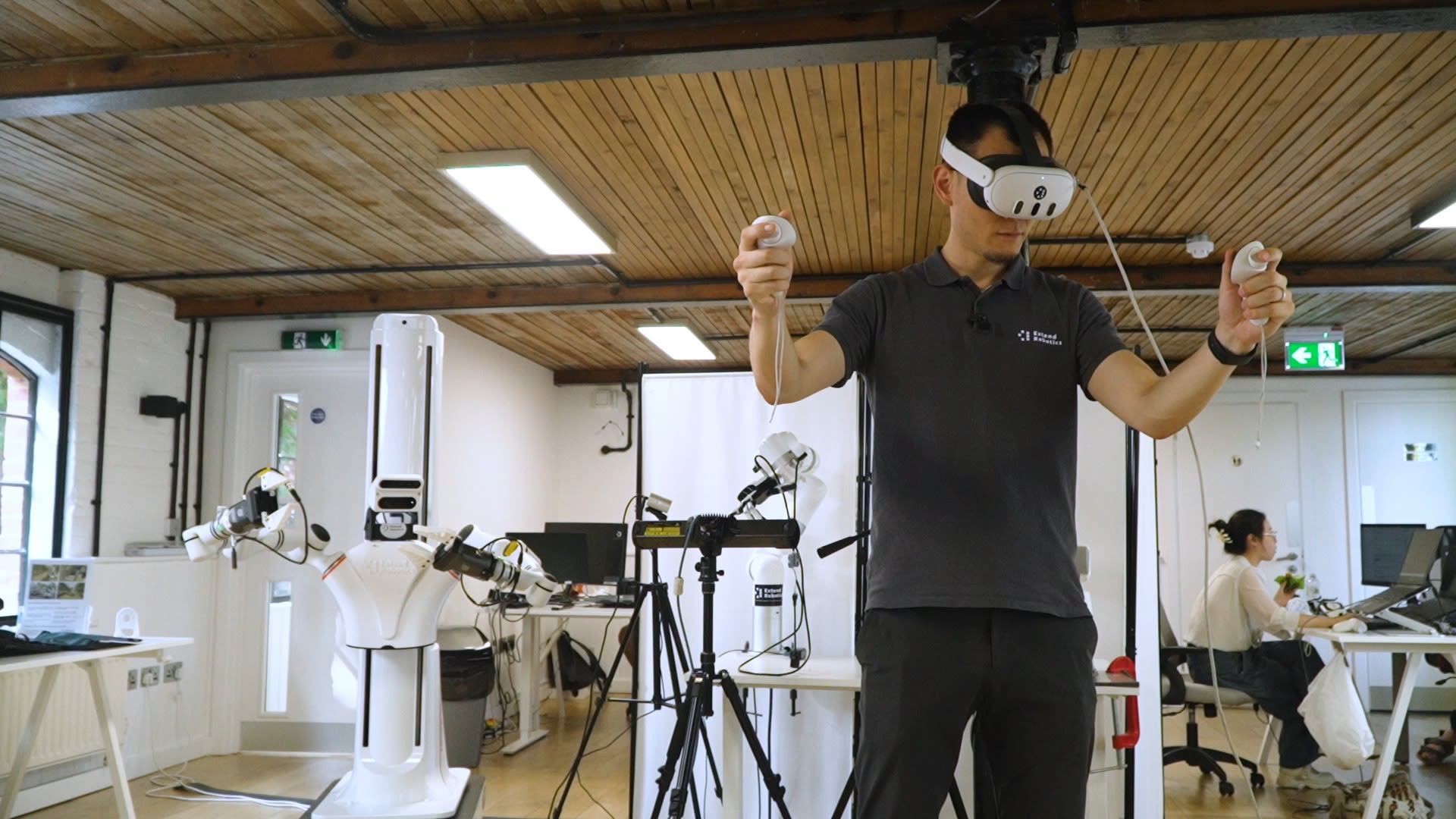
Chang Liu, helping to train robots.
Chang Liu, helping to train robots.
There, Chinese engineer Chang Liu is building software that allows users to train robots that learn from every interaction. And with enough practice, they could eventually be ready for the production line – helping companies work faster and smarter, while also making up for any shortfall in the availability of human hands.
"Robotics is the opportunity that would bridge the labor gaps," says Extend Robotics CEO Chang Liu. "That would ultimately produce enough productivity that would serve the need for future societies."
Humanoid robots look set to perform more and more tasks once reserved for us mere mortals – such as making food, delivering parcels, even working in hospitals.
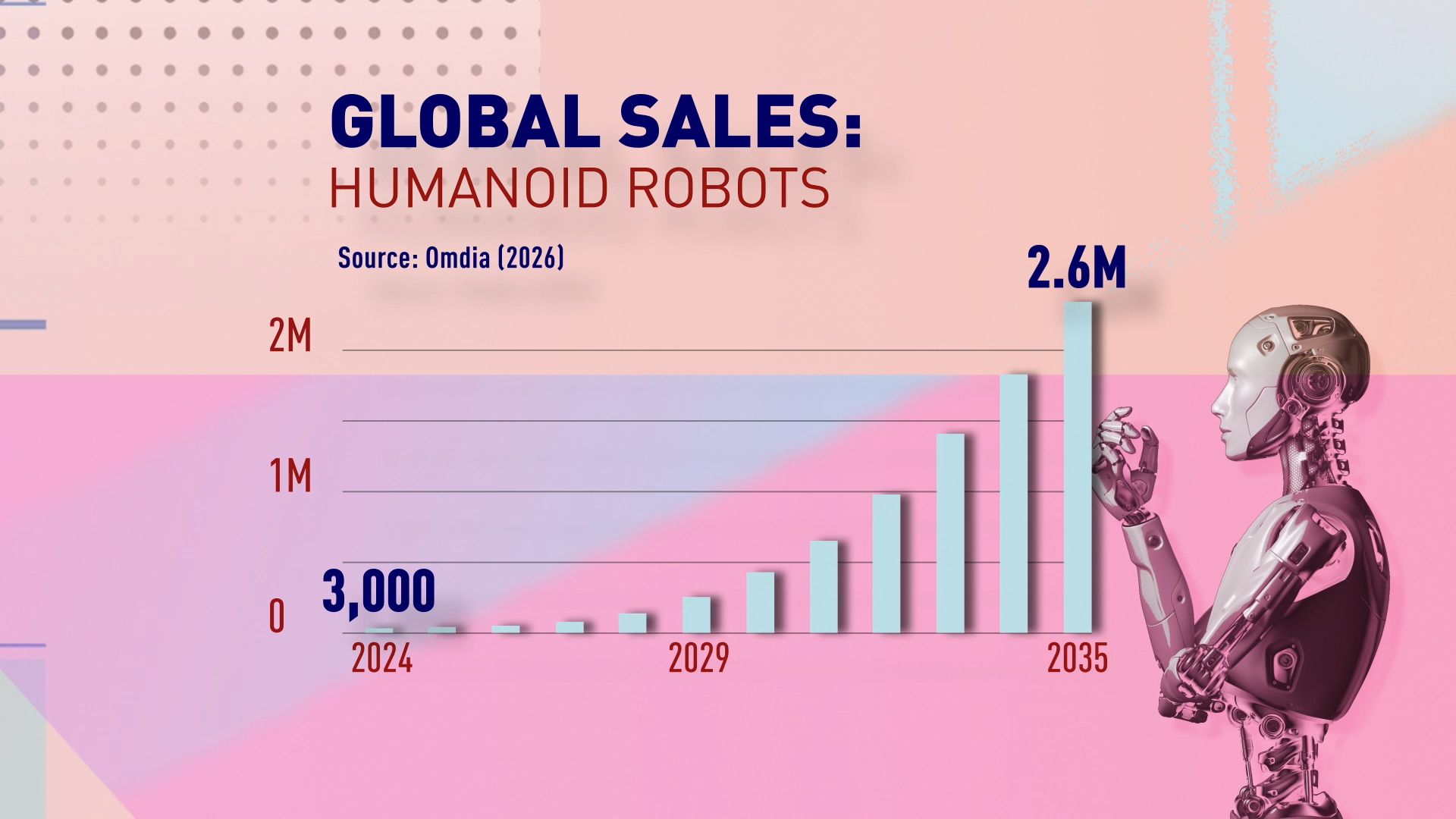
In fact, analysts say the numbers could climb from 3,000 in 2024 to nearly 2.6 million in 2035 – and in China, they're already a regular sight in public…
Your robot host… or teacher?
"Potentially that's going to be a hundred or even a thousand times faster."
In a trendy Miniso store in the heart of Shanghai, CGTN's Tianyu watches a robot welcoming guests.
"It answers customer questions, interacts in the store, and helps create a lively atmosphere," says Miniso Land Shanghai's store manager Zhang Qian.
It must have helped attract a lot of customers, because they seem to be overlooking Miniso's mascot Gift. As Tianyu says, "When a robot is in town, Gift gets a bit of a cold shoulder."
However, there's a world of difference between saying hello and shifting heavy goods. Handling things independently is still a big hurdle for humanoid robots, and while the technology is constantly improving, what you might call the 'ChatGPT moment' of widespread public acceptance is yet to arrive.
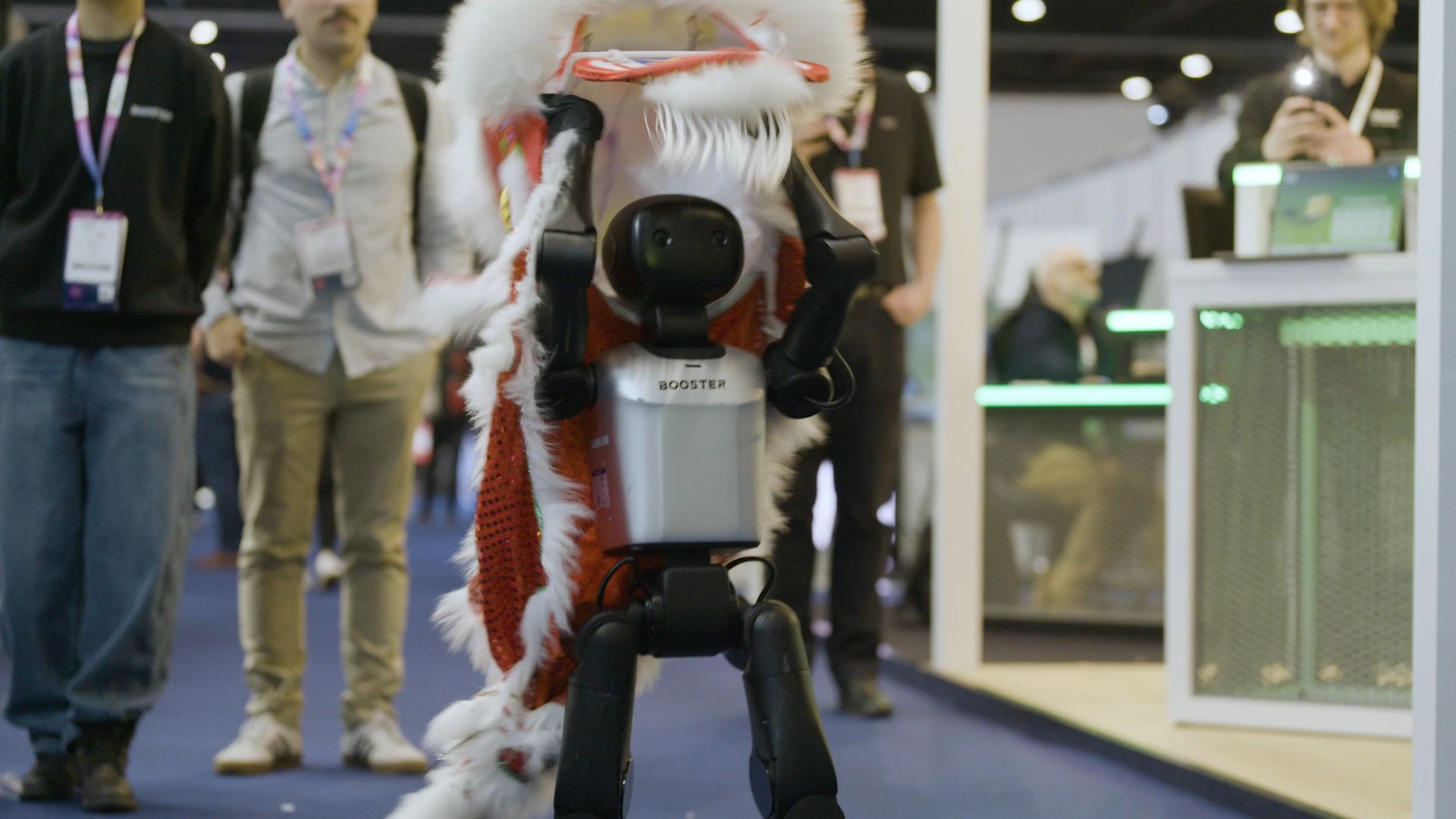
A humanoid robot at Bett UK dons a dragon costume.
A humanoid robot at Bett UK dons a dragon costume.
But while robots keep on learning from humans, could we learn from them? At Bett UK, one of Britain's biggest tech shows with a special focus on education, CGTN's Michael discovered that AgiBot has been adventurously exploring how robots can help in the classroom.
"In China, we're working with a secondary school already," says AgiBot's UK Country Manager, Martin Ma. "We built up some courses and lessons for the robots to work with the students."
For now, training robots takes time and money. But pretty soon, things could be different.
Elliot Wu, an assistant professor in machine intelligence at the University of Cambridge, is working on software that could allow robots to learn simply by uploading a video.
"Potentially that's going to be a hundred or even a thousand times faster in terms of the scale of the data that we can collect in a certain period of time," Wu tells Michael.
So while robots may not be part of everyday life just yet, they're learning all the time – and the market for China's robotics industry is only going to get bigger.
Low-altitude economy







Whenever humans have imagined fantastical technology, they have looked to the sky – be it the ancient Greeks writing about Icarus flying too close to the sun or Leonardo da Vinci doodling flying machines.
The age of powered flight has brought the sky within reach – and supercharged our imaginations for what we might do next, from sci-fi to productivity to commerce.
In this episode of Future Mode, we look at what's been termed the low-altitude economy – and scan the horizon for what happens next…
Time for take-off
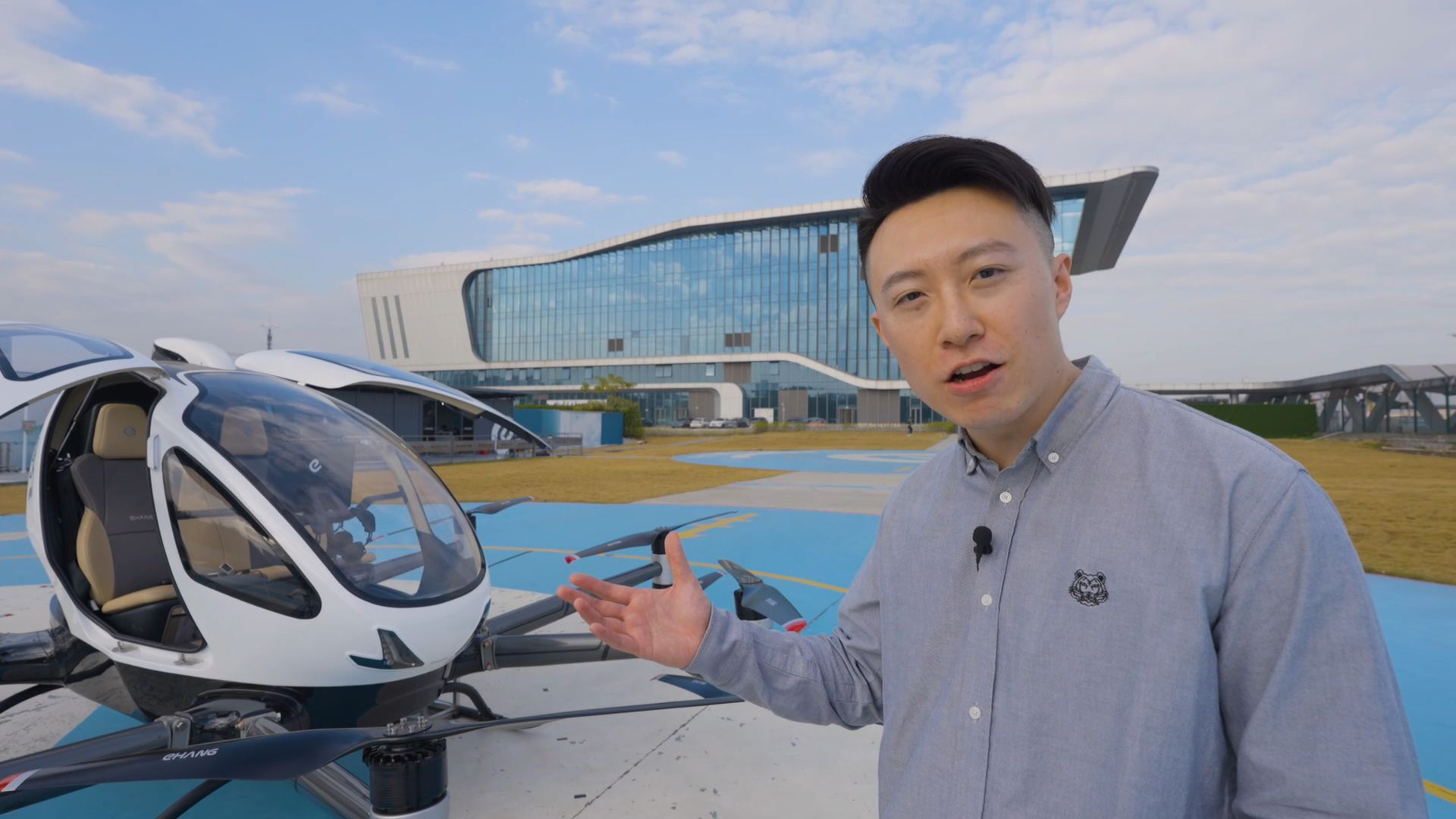
For decades, kids (and some adults) have dreamed of getting into a flying car – the kind you see in movies. CGTN's Wang Tianyu was just the same – except that recently, in Guangzhou, his dream came true.
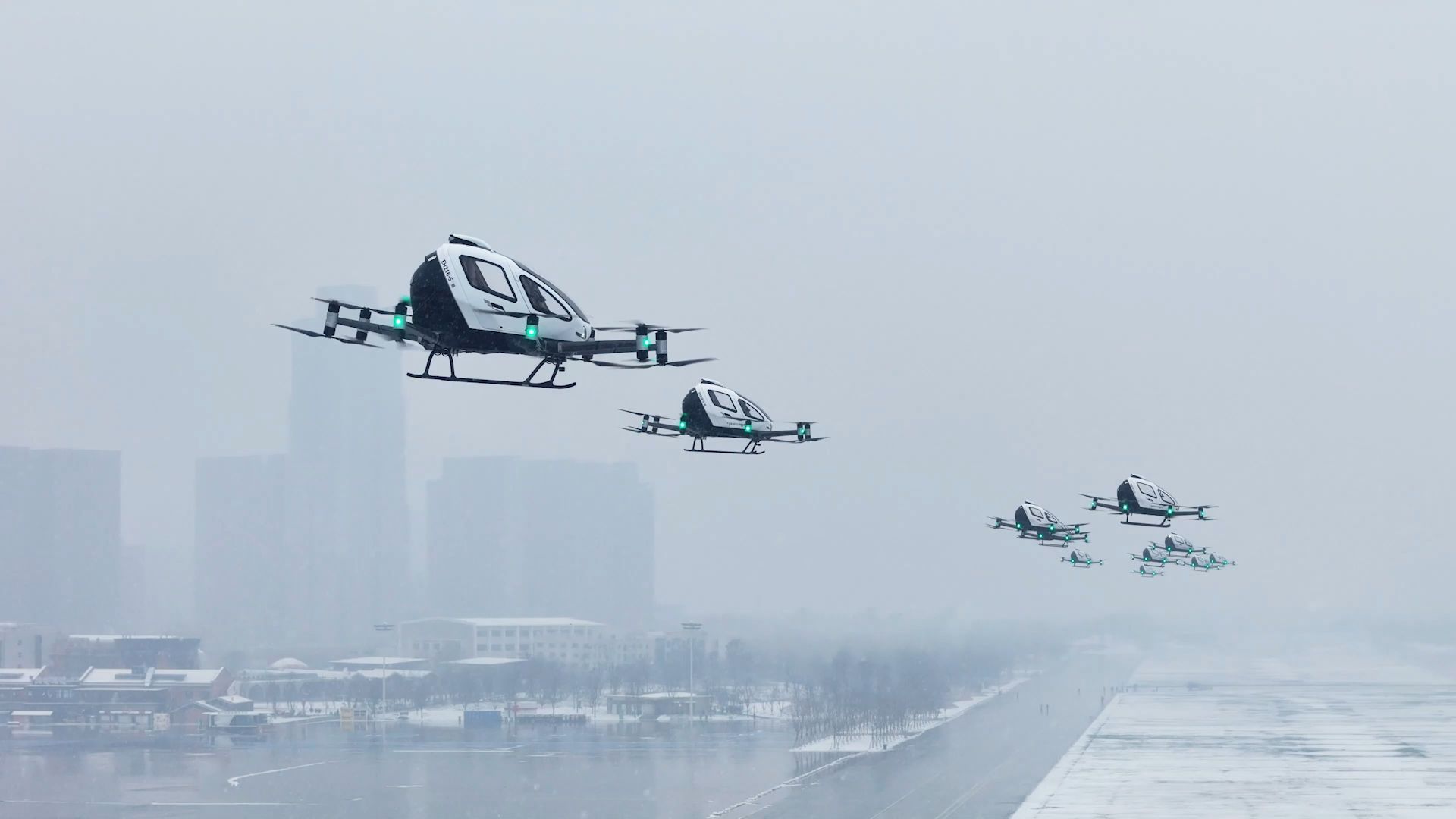
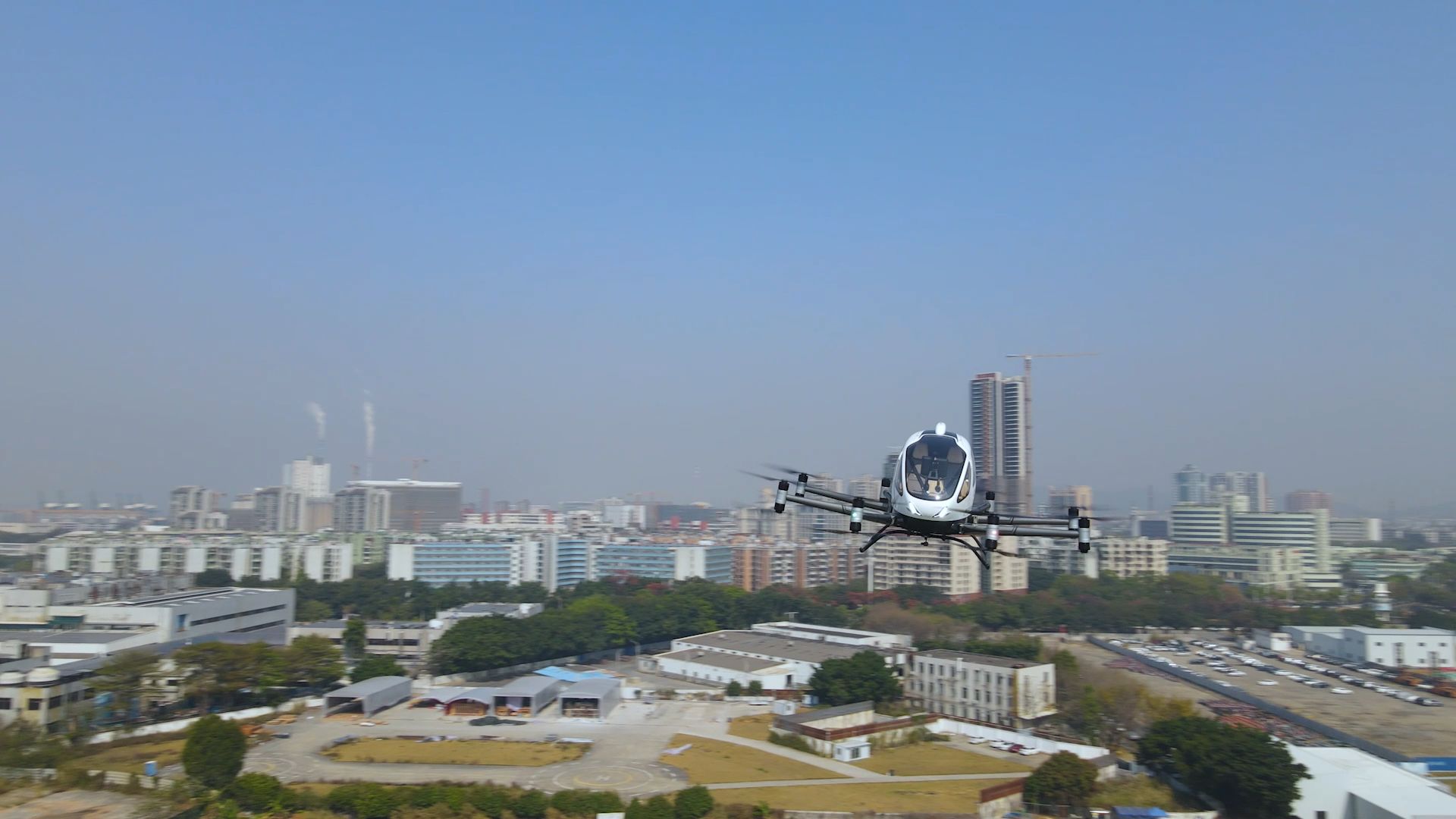
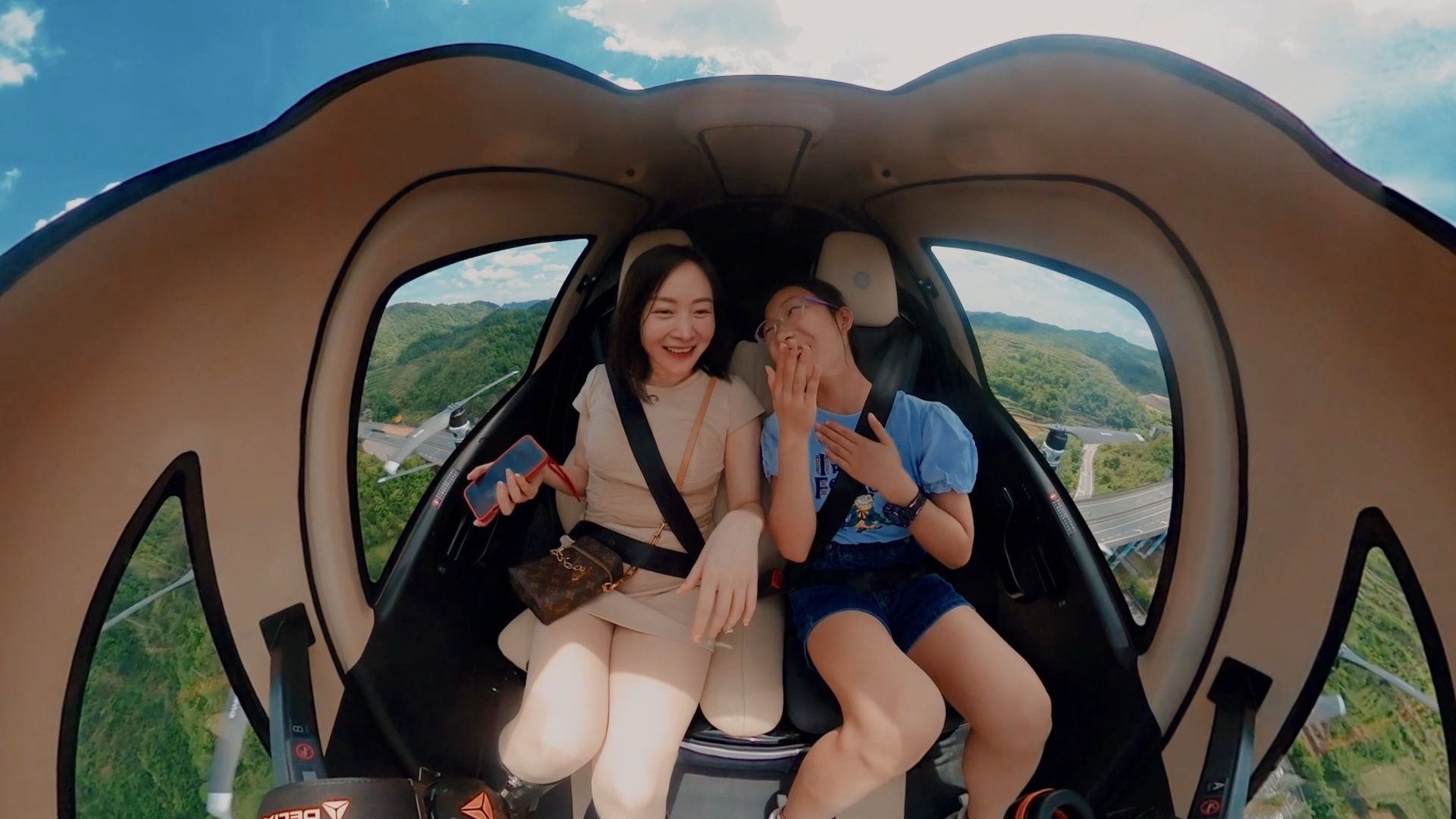
He climbed into an eVTOL – standing for electrical vertical take off and landing, which explains its selling point. Compared to helicopters, it is smaller, quieter, cheaper – and much safer.
That was comforting news for Tianyu, as he climbed in a realized there was no joystick, no driving – just the machine and him. And just like that, he was airborne.
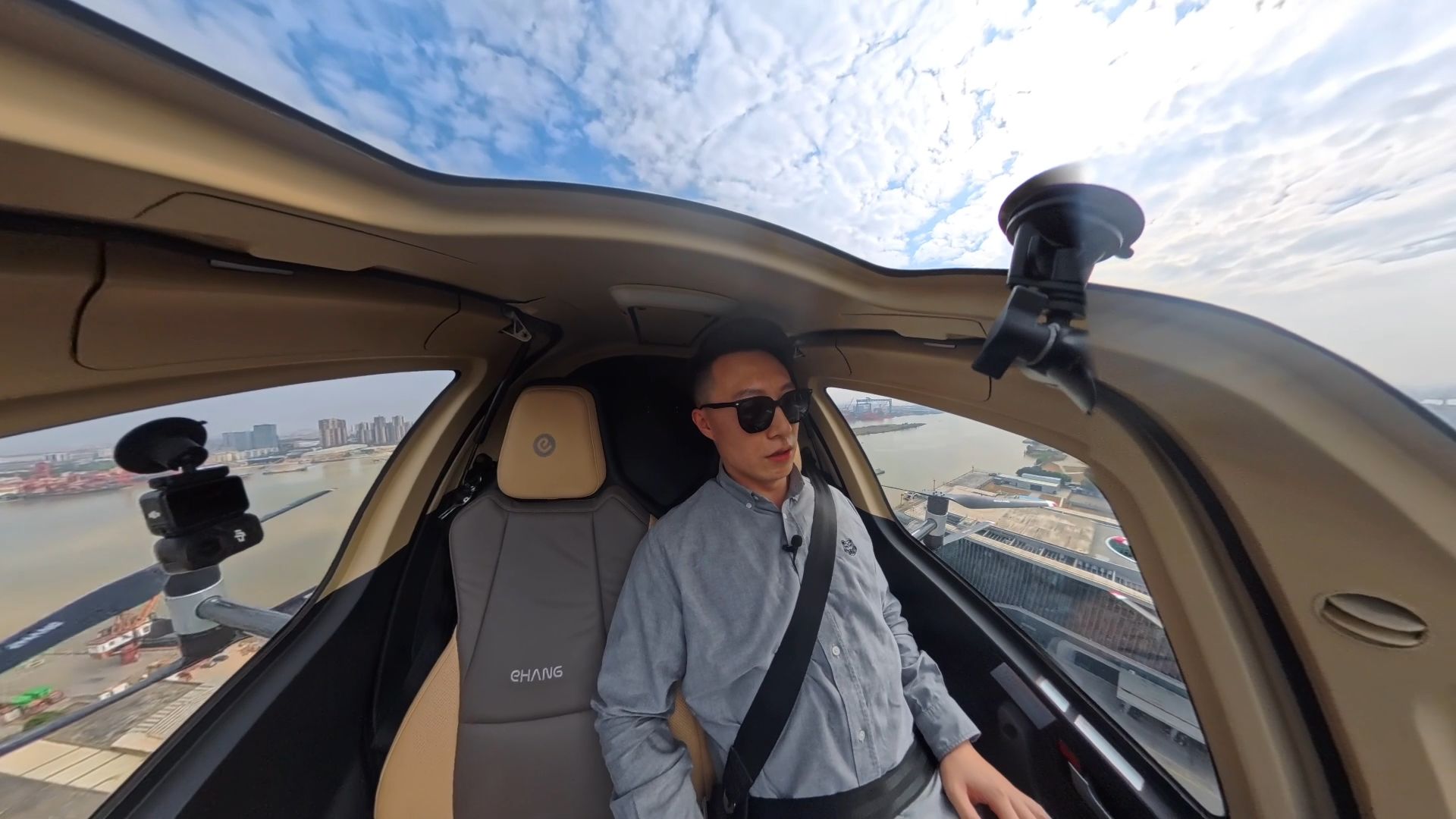
CGTN's Tianyu, not yet enjoying the experience.
CGTN's Tianyu, not yet enjoying the experience.
The eVTOL's 16 propellers keep it pretty stable, although Tianyu reports "there is still some noise and vibration, like riding in an old bus."
His nerves suggest it may take a little while for the public to get used to this sort of travel, but eVTOLs could make life easier – reducing ground-based traffic and getting people from A to B in super-quick time.
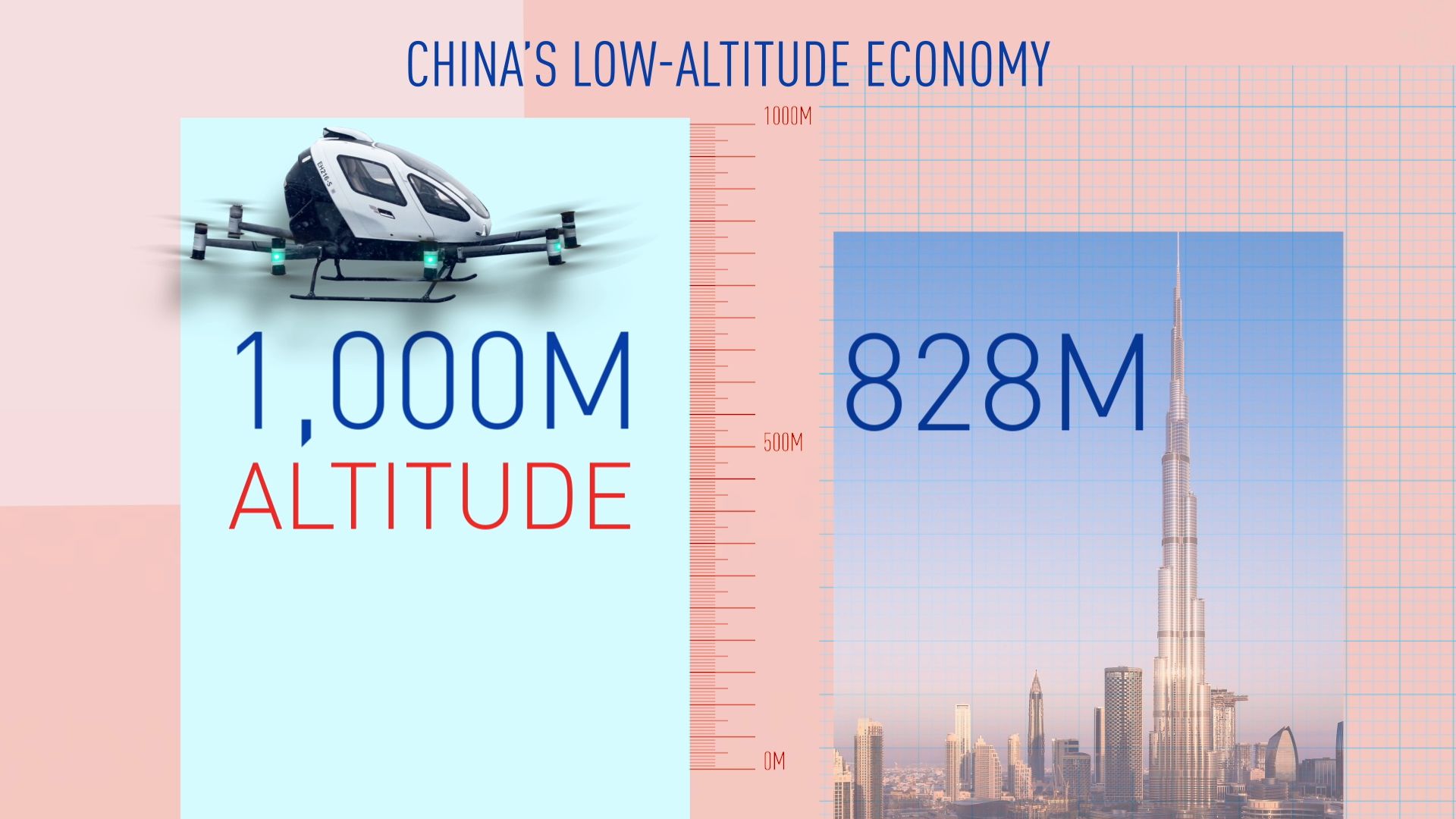
It's also a key part of China's low-altitude economy. The term usually refers to airborne economic activity below an altitude of one thousand meters – which is still pretty high: for reference, the world's tallest building, the Burj Khalifa, tops out at 828 meters above ground.
The clean green polythene machine
The low-altitude economy is not just about moving people – those thousand meters contain plenty of opportunities.
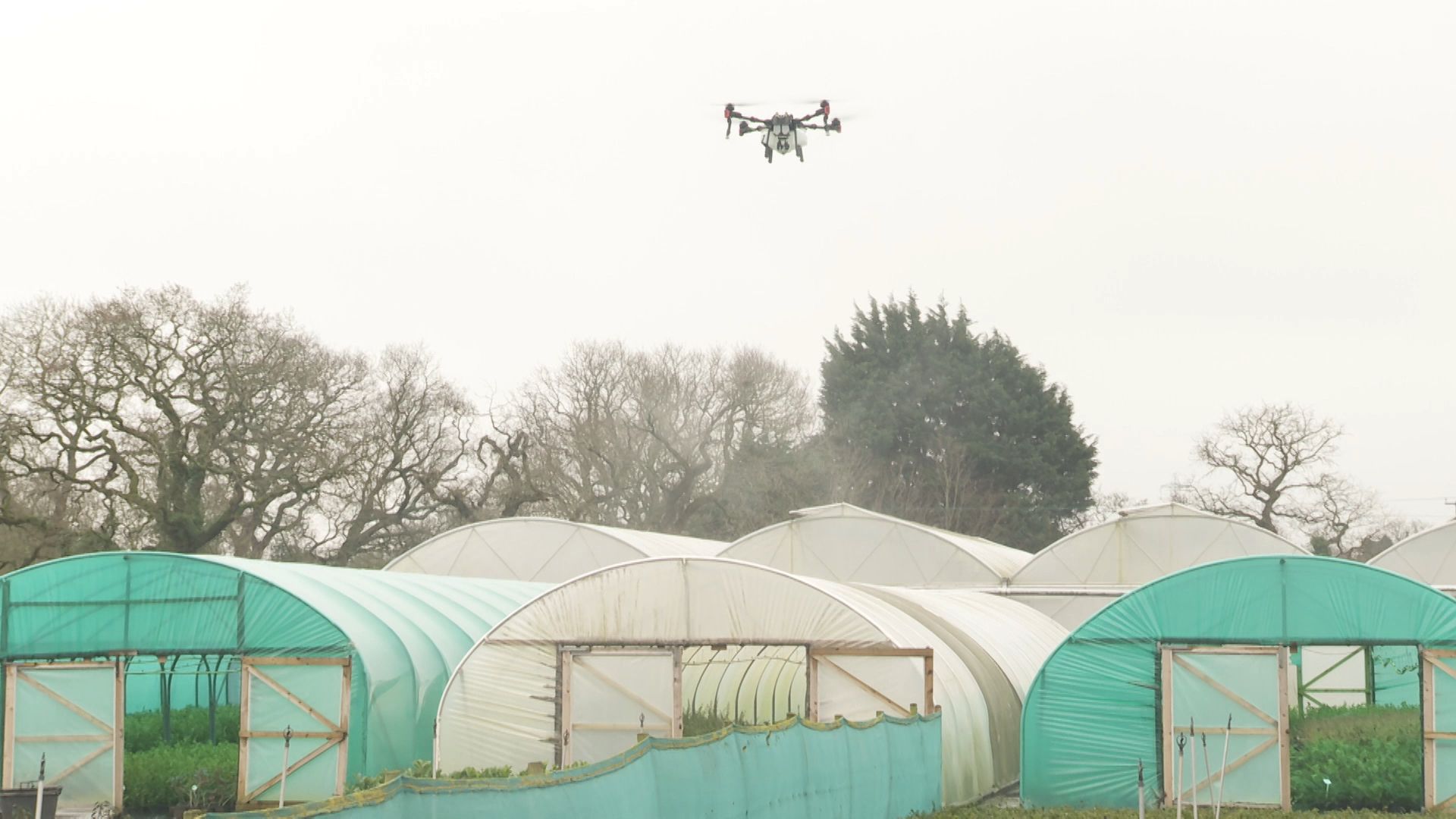
And while Tianyu was buzzing around in the skies above Guangzhou, his colleague Michael Marillier was down on the farm in Liverpool, England with British businessman Rob Pearson.
As CEO of Autospray Systems, Pearson sells drones, and in this case it's one built by Chinese firm XAG. Working on a small farm outside the northern city, it's cleaning tunnels made from polythene.
"It's all about growing power – the sun is your growing power," Pearson said. "You put your lovely clean polythene in the first year, and you get a bumper harvest.
"The next year, you've got algae growing, it slows your crop down, and eventually you scrap your polythene. But if you can clean it, it's of huge benefit to the farmer, and also to the environment, because you don't need new polythene."
Flight to normality
"Within the next two years, urban eVTOL air routes will become fairly common."
Not everyone is on the bleeding edge like Tianyu, and it can take time for a niche industry to reach the mainstream. How soon could eVTOLs become normal – just a part of daily life?
"I believe that within the next two years, urban eVTOL air routes will become fairly common," says He Tianxing. "Some cities are already geared for commercial flights."
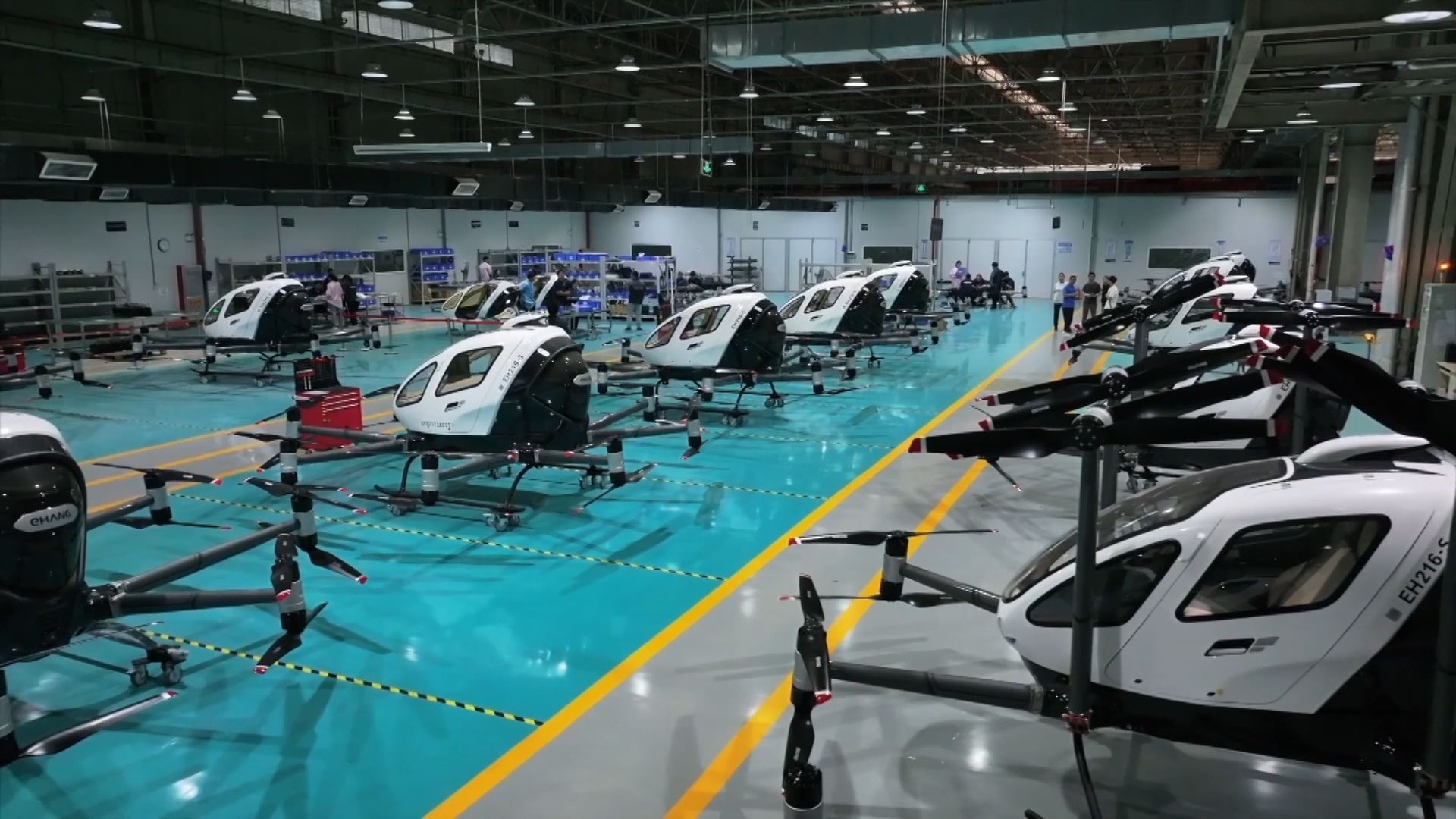
He is vice president of EHang, one of a few Chinese firms to have been testing this technology for years. While eVTOLs may look complicated, nearly 80 percent of their components are used in electric vehicles – and China already has strong supply chains in that industry.
All of that means the sector could develop really fast. In fact, experts predict that by 2030, China will have over 100,000 eVTOLs. And they won't just be taxis – they could deliver goods, rescue people in danger, and even fight fires.
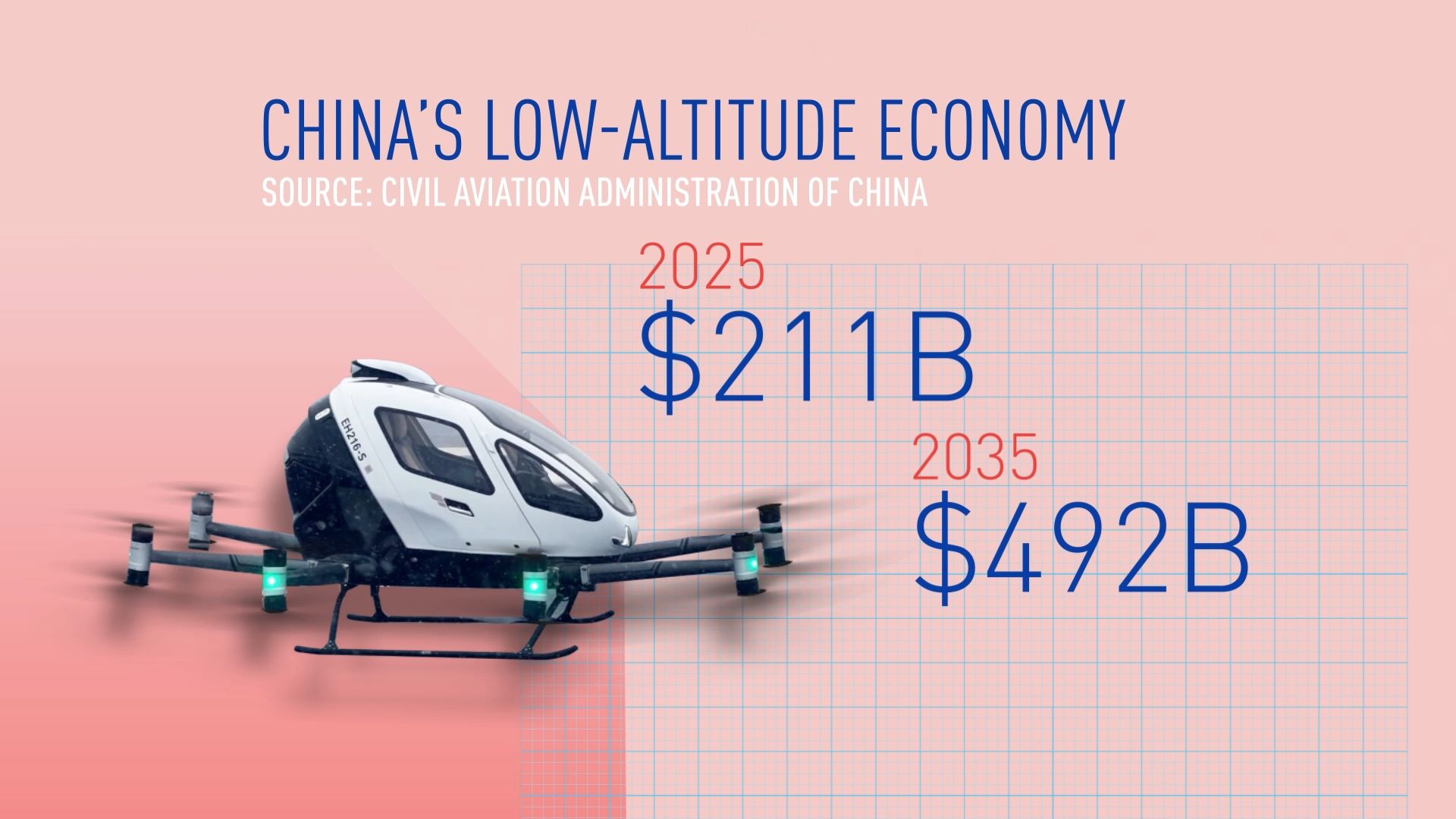
If that happens, China's low-altitude economy will grow like never before. It was worth around $200 billion in 2025, and officials say it could reach nearly $500 billion within a decade.
Boosting productivity
The effects in the UK won't be as huge – it's a smaller economy, and almost certainly a later adopter. But analysts still think thousands of British farmers will be using drones within five years.
Their uses could be manifold – not just cleaning polytunnels, but monitoring crops and, in some cases, planting seeds. They could even help grow forests, by dropping hundreds of seeds in just a few minutes.
In all, according to analysts PricewaterhouseCoopers, drones could add $2 billion to the British economy by cutting costs and improving productivity.
So while it might seem like the stuff of sci-fi, the low-altitude economy is coming soon – and taking productivity skywards.
Robotaxis





We live in an automotive world. No matter how good (or more frequently bad) your country's public trains and trams are, the fact is that most of the planet is propelled by the motor car.
For most of the history of the car, if you couldn't or wouldn't drive yourself around, you had to employ another human – either a chauffeur or a taxi driver – to do so, continuing a pattern that stretches back through horse-drawn hackney cabs and hansom carriages to human-hefted rickshaws.
But now, we're entering the era of the autonomous automobile – a driverless vehicle, navigating using AI and a sensory perception system that owes more than a little to… bats.
This is Future Mode, and this is autonomous driving.
How robotaxis know where to go
"I feel like the car knows every single road and alley, so it can make decisions in advance."
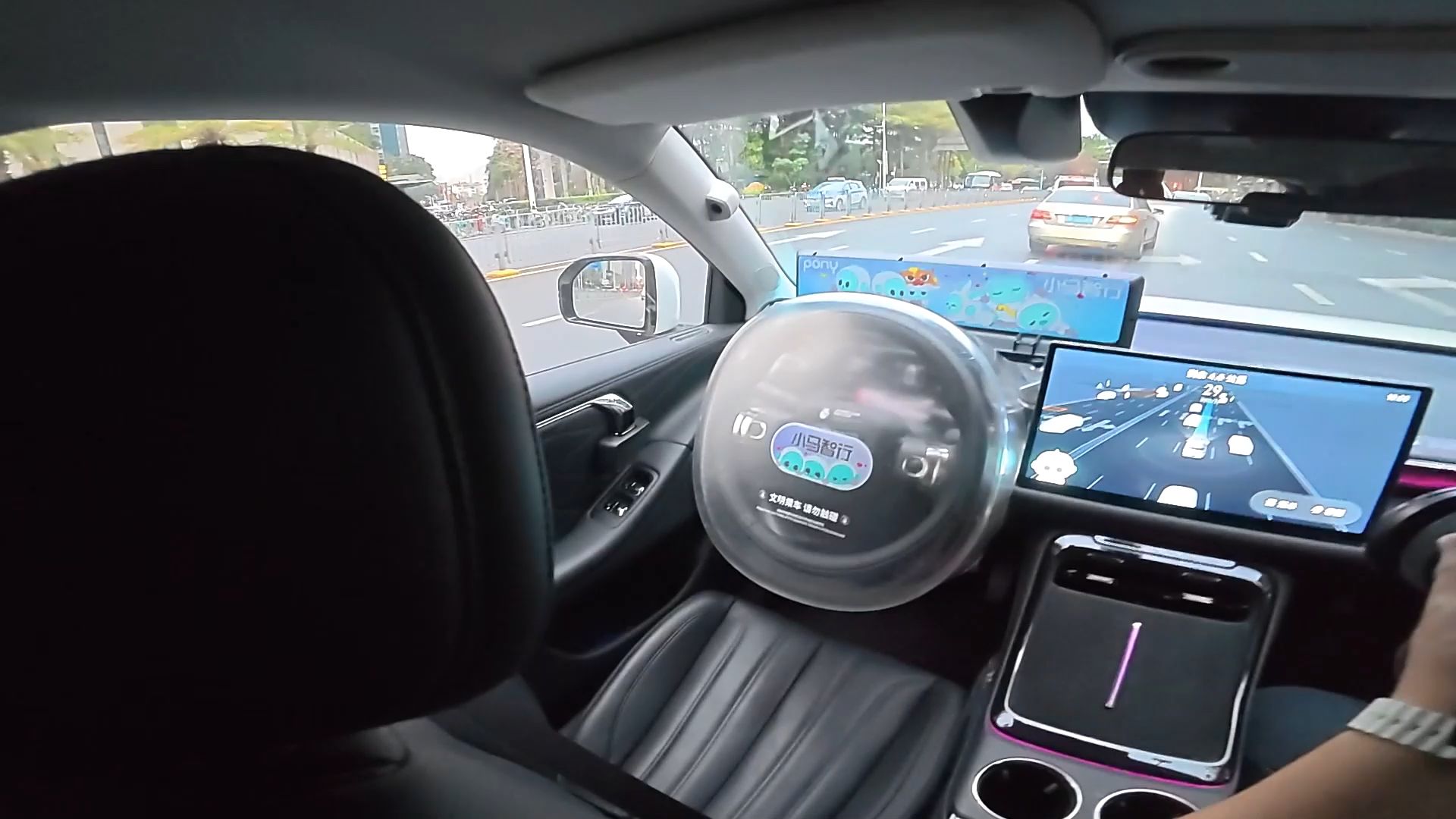
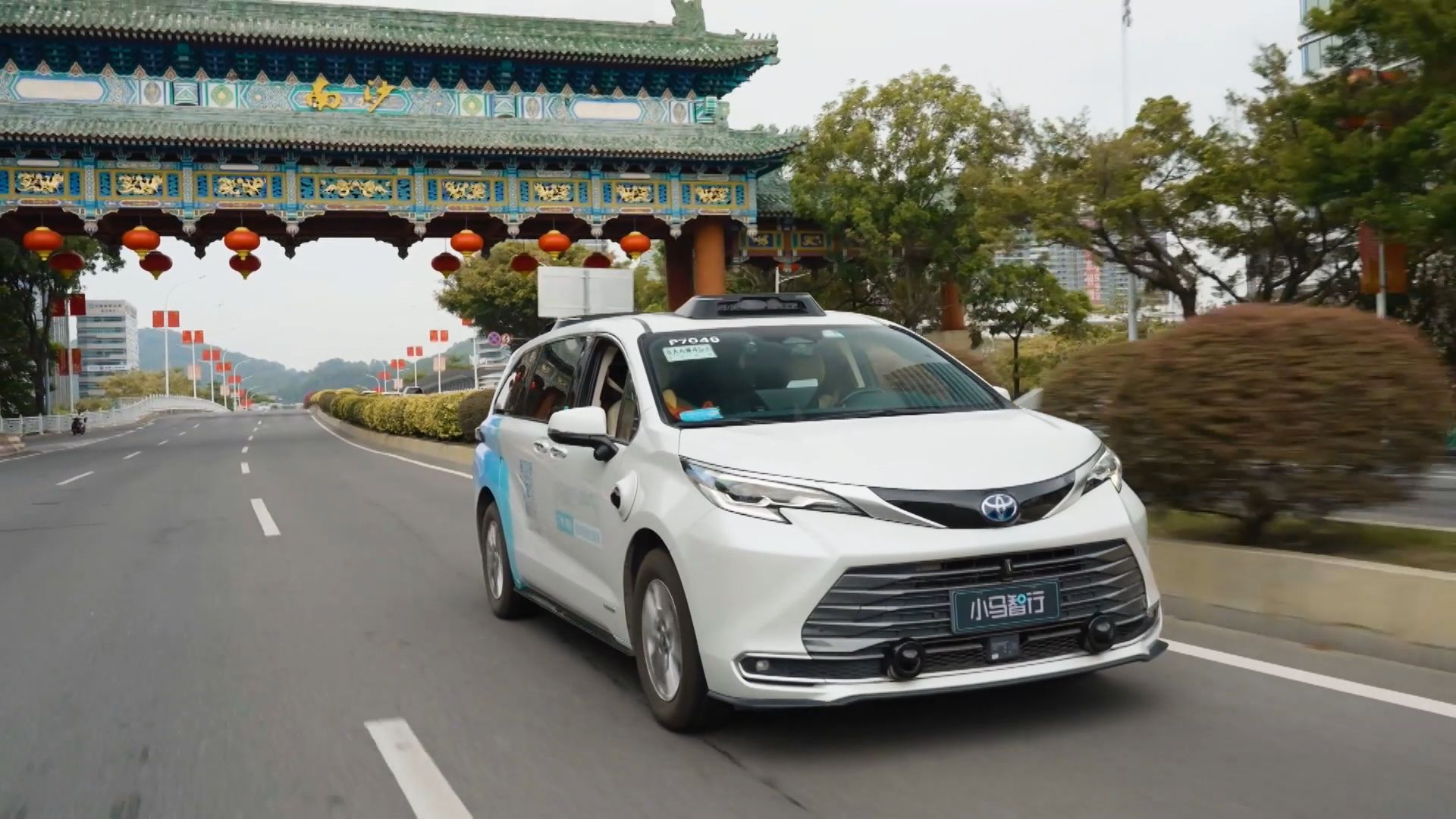
We join CGTN's Wang Tianyu in what, just decades ago, would seem like a nightmare scenario: zooming along city streets in a car without a driver.
Tianyu's fully autonomous 'robotaxi' doesn't need a driver to check the mirrors, pump the pedals, spin the wheel and work out the best routes – not in the age of superfast technology.
The purely mechanical movements (stop, go, turn) come at the behest of AI, the driver's brain – and it's a brain constantly updated with data feeds calculating possible routes.
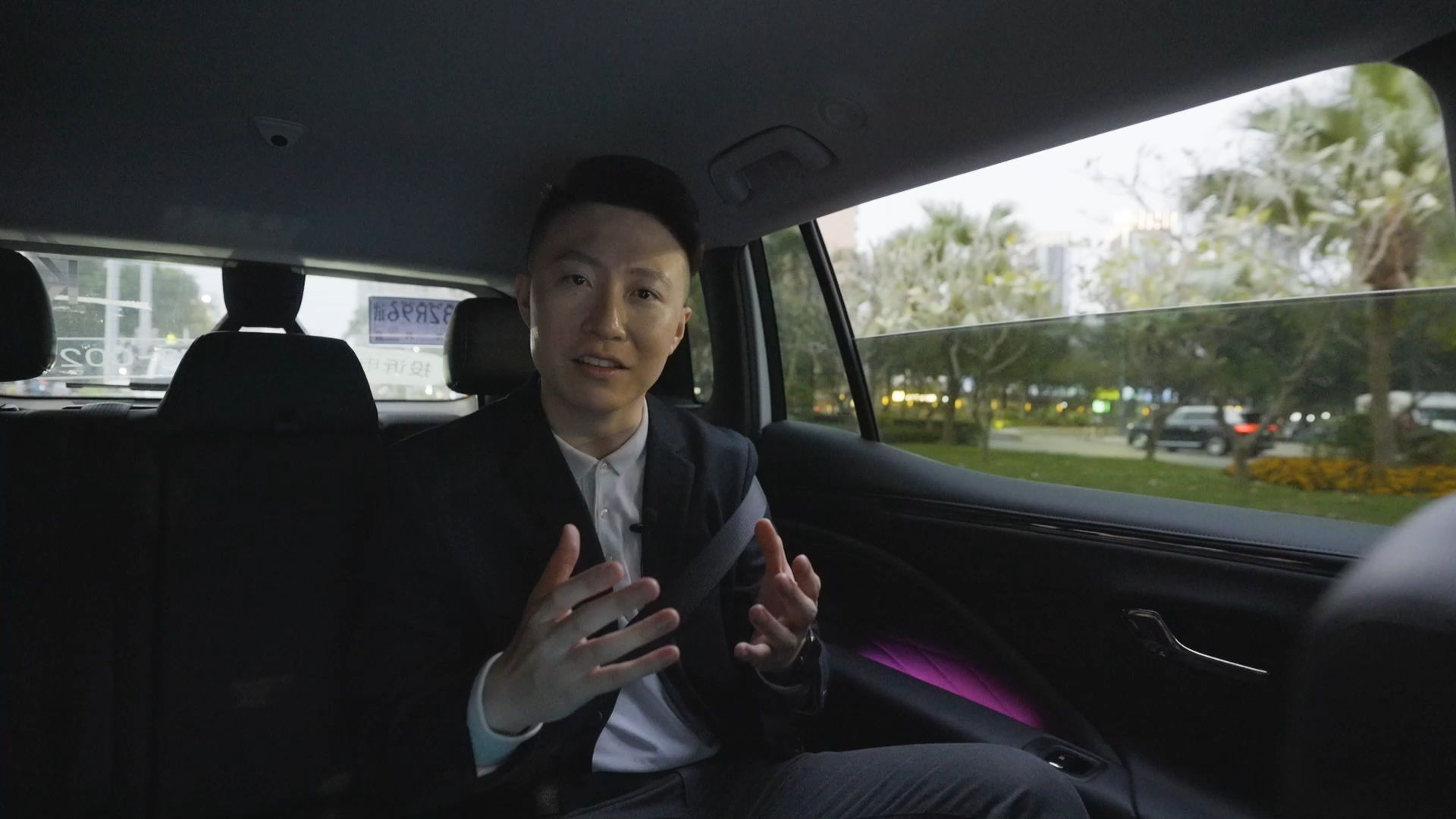
Tianyu relaxes in his robotaxi.
Tianyu relaxes in his robotaxi.
That's a feedback system you may already be aware of and benefitting from, if you've ever taken advice from your favored online-mapping app that "a faster route is available". However, there's a feedback system on robotaxis that takes awareness to the next level.
The car is dotted with cameras, observing the surrounding traffic from every angle, but that information is supercharged by an idea borrowed from bats.
The winged mammals are famed (and feared) for their ability to fly at night without bumping into anything. They achieve this by echolocation – emitting noise, listening to how it bounces back off objects and prey, and using that input to calculate a moving 3D map of their world.
Inspired by the bats and terrified by the Titanic disaster, humans adapted echolocation into sonar (SOund Navigation And Ranging) for use in boats and submarines; many cars' parking sensors use a similar system.
However, sound is impacted by atmospheric conditions; in poor weather even bats, evolved over millions of years, can only detect up to two meters away – far too close for vehicles traveling at speed on public highways.
Instead, robotaxis use lidar (LIght Detection And Ranging), bouncing pulses of infrared laser light off their surroundings in order to build up a 3D map of the environment.
The information from these 'extra eyes' feed into the car's 'digital brain', allowing it to track movements and react in real tim – and in the back of his rush-hour taxi, Tianyu can relax.
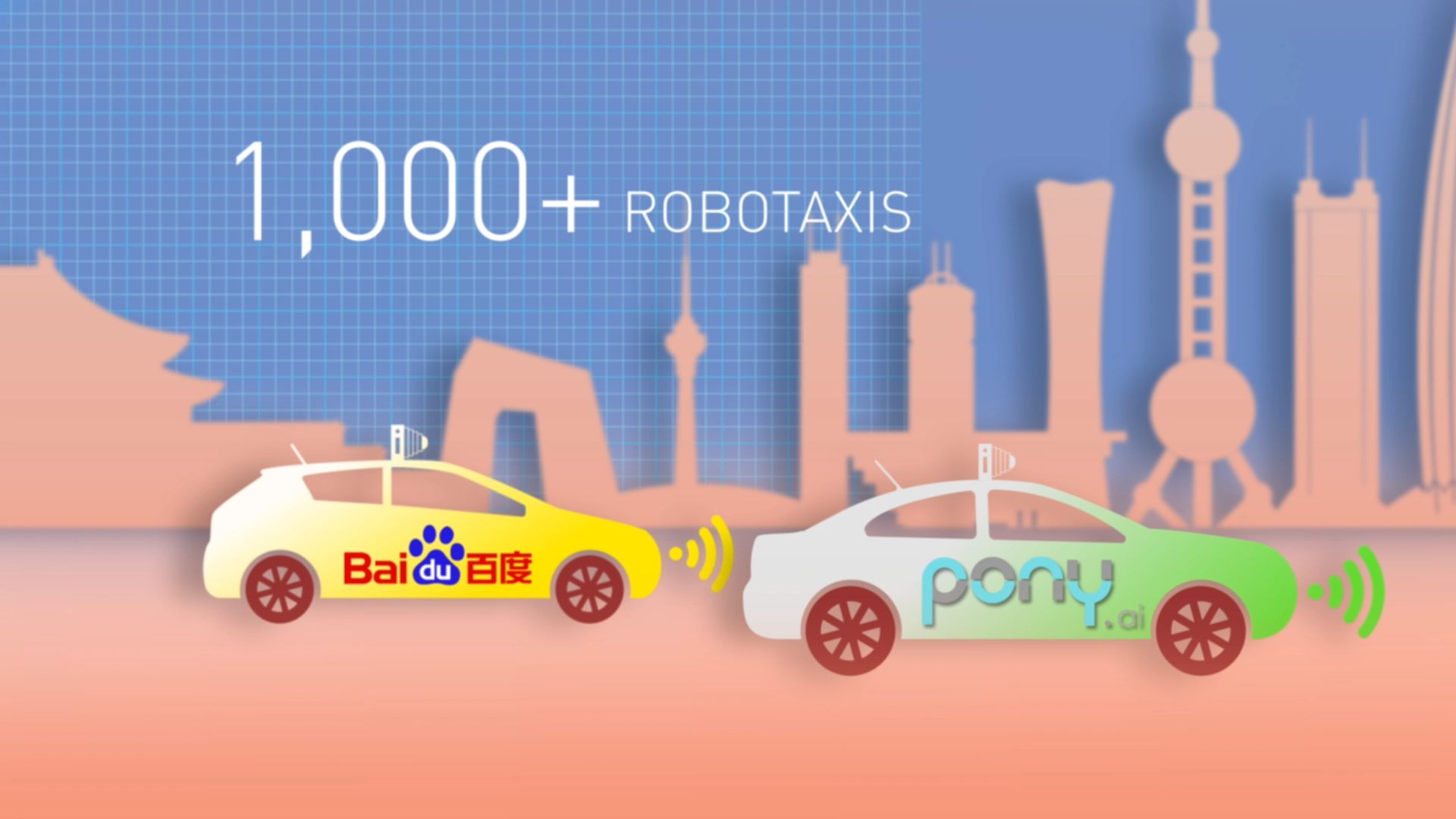
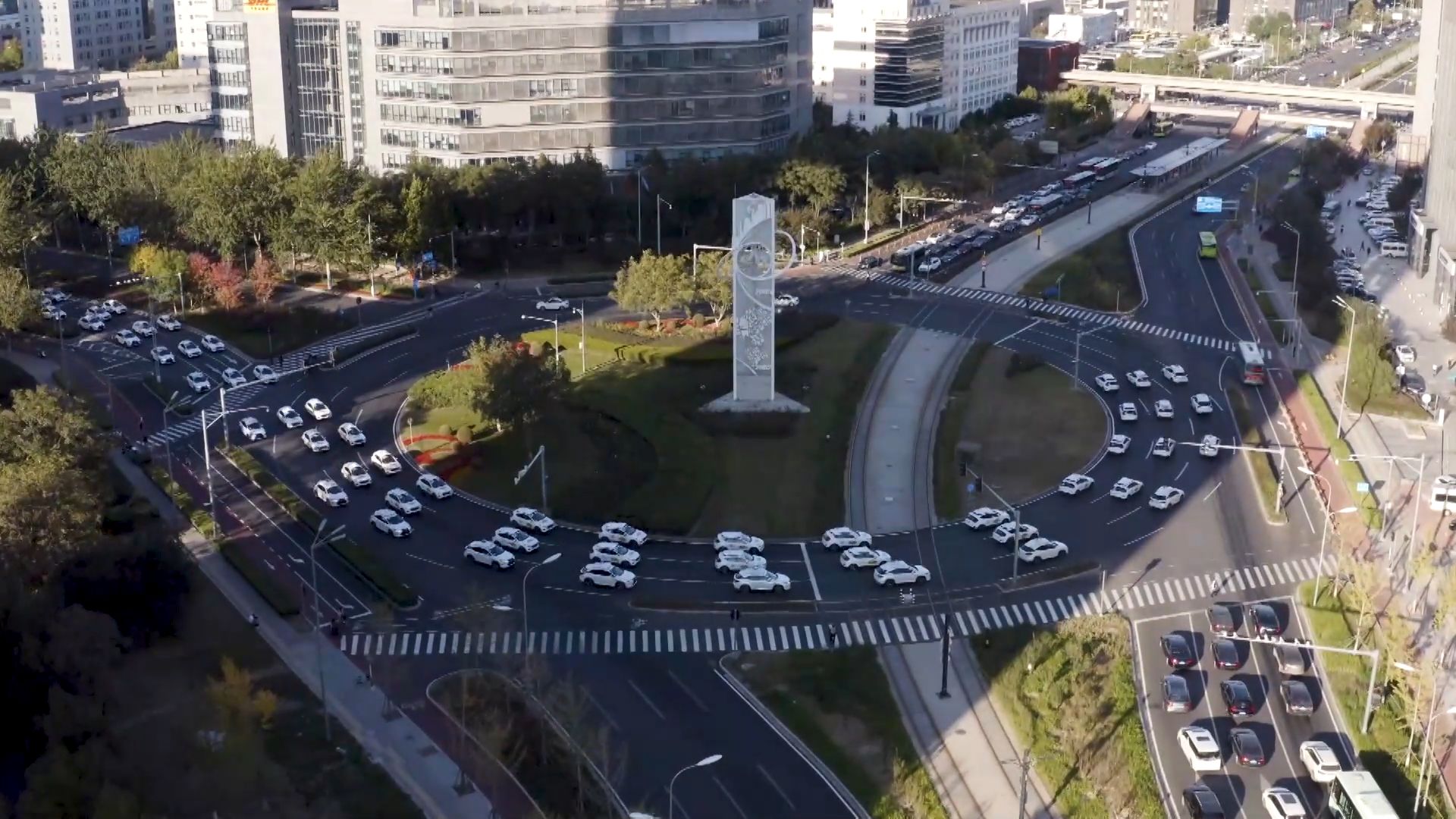
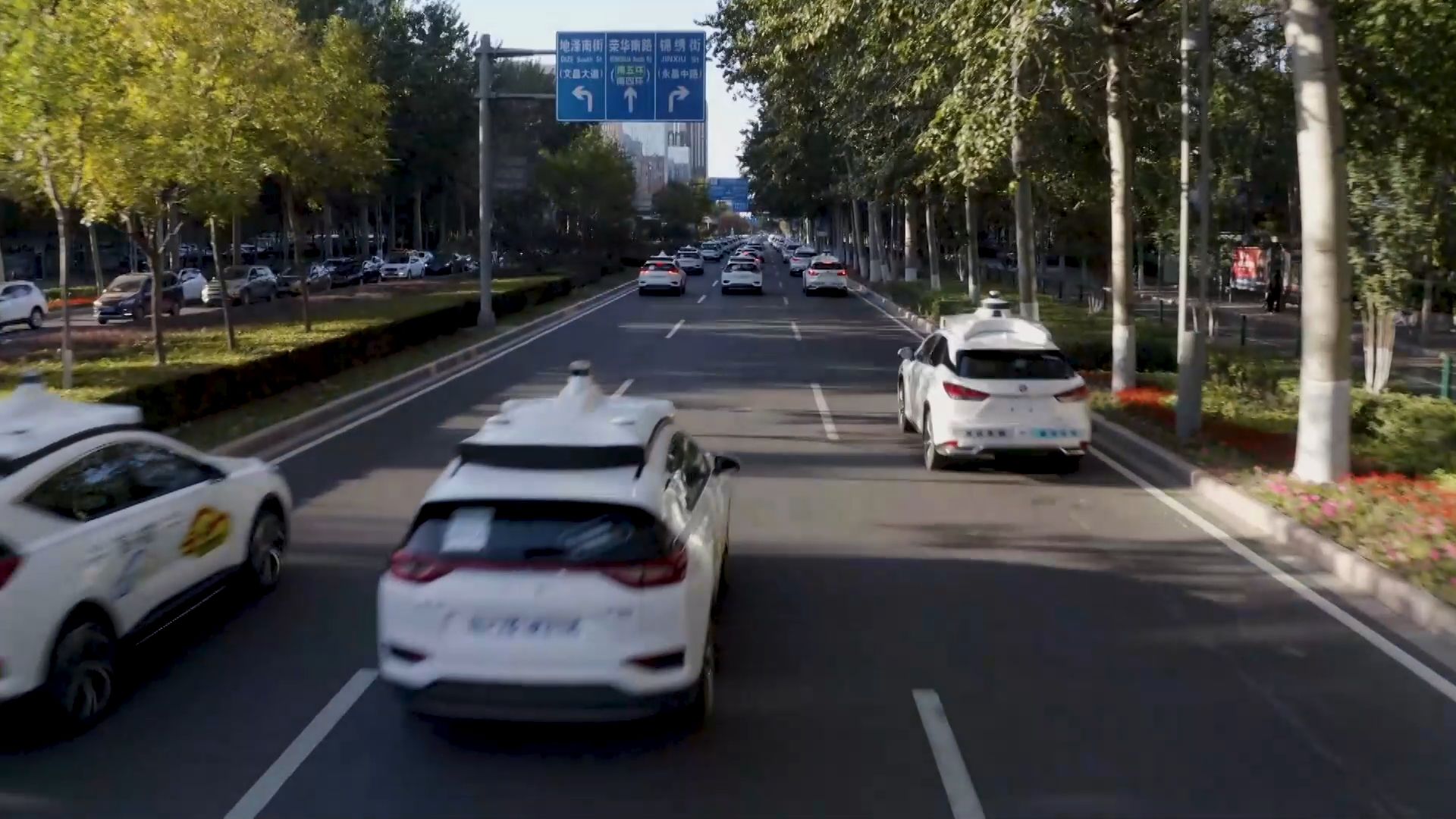
And he's not the only one. In China, Pony.AI and Baidu's Apollo are among the major players, each of them operating more than 1,000 robotaxis on public roads. As bookable as regular human-driven cabs, they're changing commuting patterns and improving safety and efficiency in urban environments.
As Tianyu says, "I feel like the car knows every single road and alley, so it can make decisions in advance. But it can also respond to the unexpected – hitting the brakes in the blink of an eye."
Europe gets on the road to robotaxis
"It's like we're being driven by a ghost. But here we are – this is the future."
If China is at the vanguard of robotaxis, could Europe also be a home to this transport revolution? CGTN's Michael Marillier took to the streets of London to canvas public opinion.
"I see it all over social media – I definitely would get in one, for sure," enthused Misha. "It would be quite fun to have self-driving cars in London."
"Cars coming out of China are exceptional with the technology that's built into them – and incredibly affordable," said Bowha. "So I've got more trust now than I did, as short as two years ago."
One slightly older respondent, Chris, was a touch more hesitant – but wouldn't rule it out: "I think maybe for those driving for a significant amount of years, it may take a little bit longer for us to get used to the concept."
Those members of the public could ask their interviewer for his own experience of Chinese robotaxis. In Shanghai recently, Michael jumped in a Pony.ai robotaxi and found the experience, in his words, "kinda spooky."
"There's no one in front of me," he reported from the back seat. "It's like we're being driven by a ghost. But here we are – this is the future."
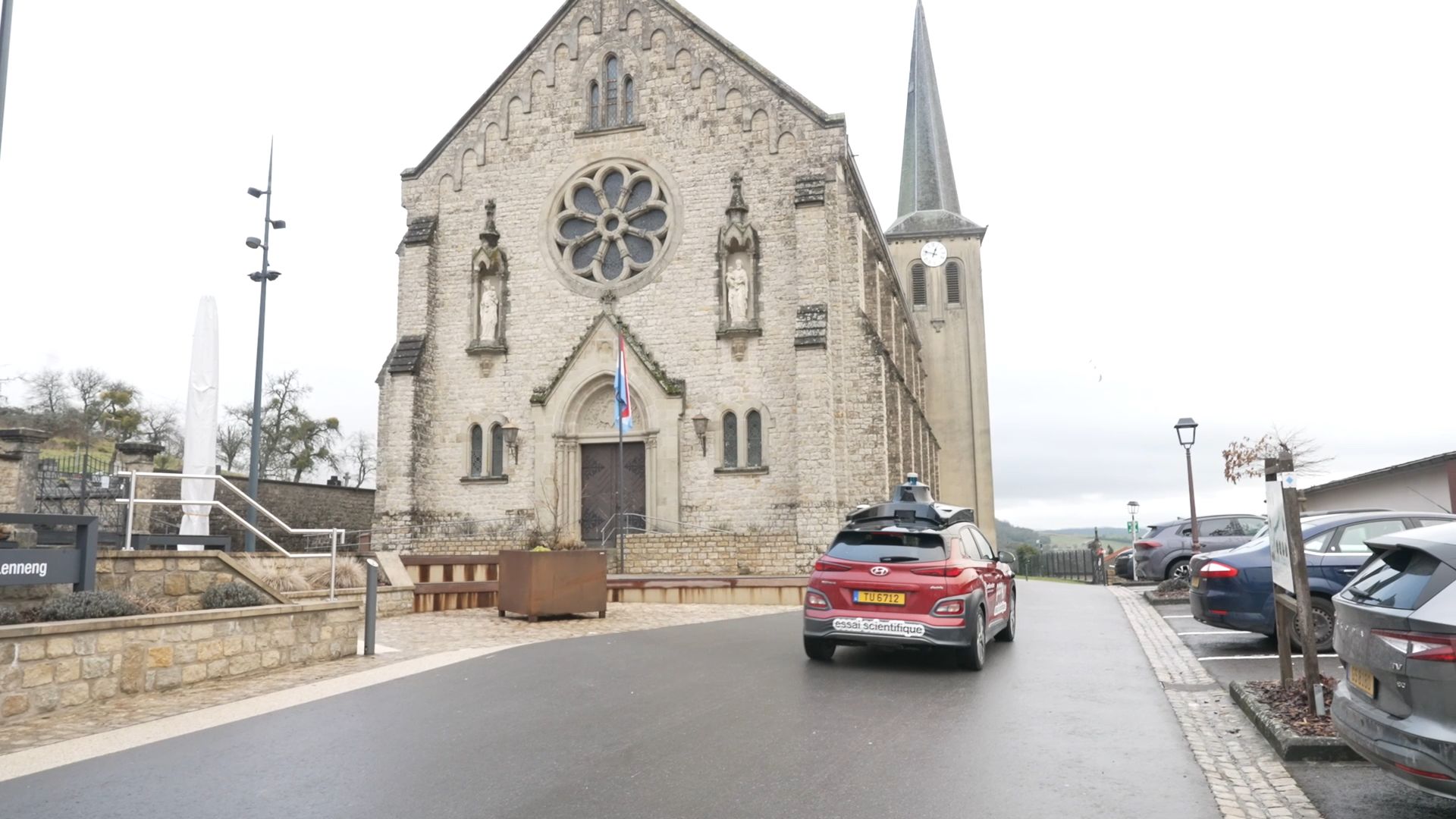
And it's a future that could be heading west – Pony.ai is hoping to offer robotaxi services in European cities. But that's not as simple as it sounds: Europe's roads are different to those in China, and its laws are different too, not to mention differing between countries.

And that's why the company is setting up shop in Luxembourg – nestled usefully between France, Belgium and Germany. It's running a test program, training its systems to understand Europe, one trip at a time.
"The key thing is figuring out – how do people drive differently? How do they react differently in different situations?" asks Andreas Reschkha, Pony.ai's Director of Product, Systems & Safety.
Safety and testing
"Our record has shown, it's almost 10 times safer than a typical human driver in our operating areas."
So the wheels are turning in Europe, but how long will that journey take?
In China, the industry has made steady progress, moving from the test phase to daily use. It took time, but the robotaxi revolution accelerated in late 2022 when officials decided that some services no longer required a safety driver.
"We actually have multi-layers of redundancy," explains Pony.ai founder and CEO James Peng. "All those hardwares and softwares, and AI design, has intertwined and integrated together to ensure safety.
"Our record has shown, it's almost 10 times safer than a typical human driver in our operating areas."
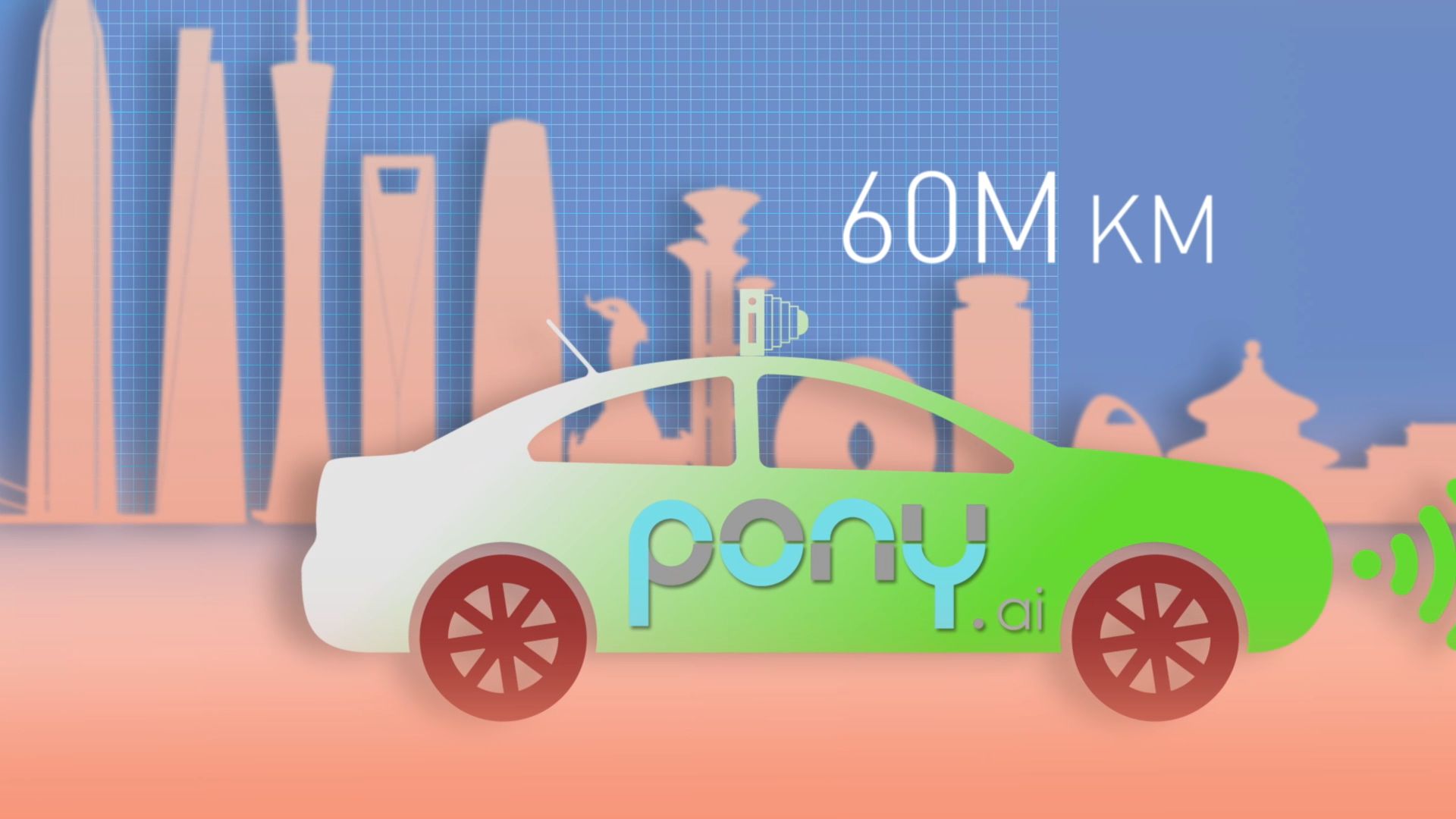
Pony.ai, which clocked up more than 60 million kilometers during test drives, currently generates almost half of its revenue from another mobility business: self-driving trucks.
These vehicles travel along highways and major logistics routes – helping companies move goods between cities. And analysts say self-driving services can build on their experience in China.
However, it may not be immediate. Ron Zheng, of consultancy firm Roland Berger, notes that Chinese firms will have to tweak the technology to Europe's roads, with their baked-in complexity.
"Chinese autonomous driving companies need to retrain the models," Zheng tells CGTN. "European roads feature narrow streets, roundabouts are very common and there are also mixed urban, suburban and rural traffic conditions."
Back in Luxembourg – and back at the testing stage – it's time to hit the road. The safety driver holds the steering wheel, but only steers in an emergency.
Regulators could allow the cars to operate without backup drivers if they pass a series of tests. That may take several years, but the company says artificial intelligence is accelerating the learning process.
"We use a lot of generative AI – especially in our simulation environment – to create artificial worlds, to create more test cases," says Reschka. "And to test things that we can't experience on the road, but we know we will have to solve when we experience it."
The road to the future can be a slow crawl, or a sudden dash. But this is a route that's already been traveled – and the signs are good that we'll reach our destination soon.
Wind power

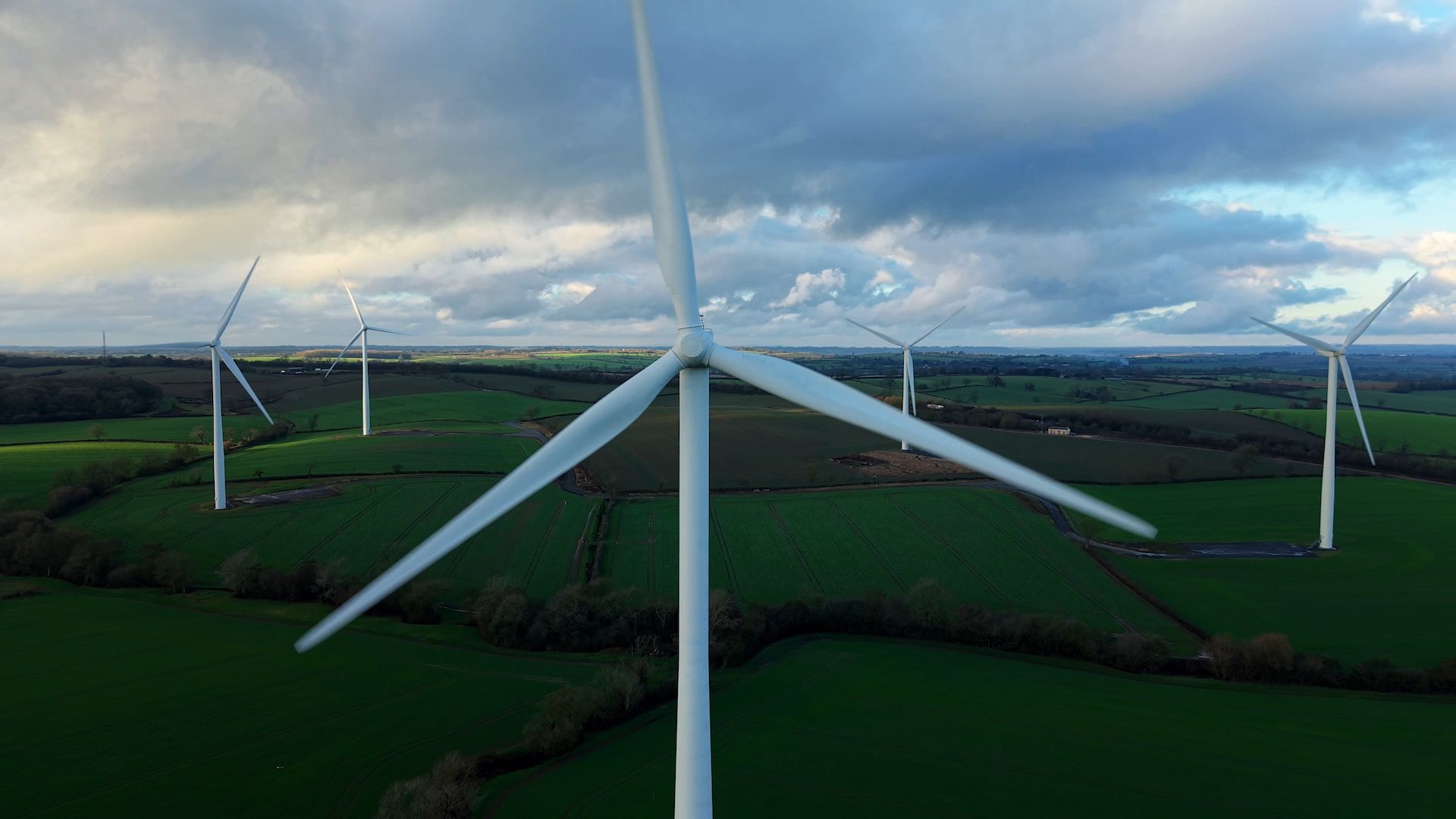




Wind power has a long past and a huge future.
Humans have harnessed the strength of the moving atmosphere ever since the first cloth hoisted above a boat put the 'sail' into sailor, uncountable millennia ago. And for several centuries, windmills and windpumps have driven our machines, drained our land and ground our crops more powerfully and practically than any amount of muscle-power.
The usage of fossil fuels might have marginalized wind power, but it has also placed our planet in danger. Amid a growing desire and necessity for greener energy, not to mention ever-improving technology, the world is turning to wind turbines for power that's not only clean but cheap, that's sustainable and renewable, and that's always there, just waiting to be harnessed.
This is Future Mode, and the power of the future is wind power.
Harvesting the wind
But how do you build that future? Well, for a start, you have to think big.
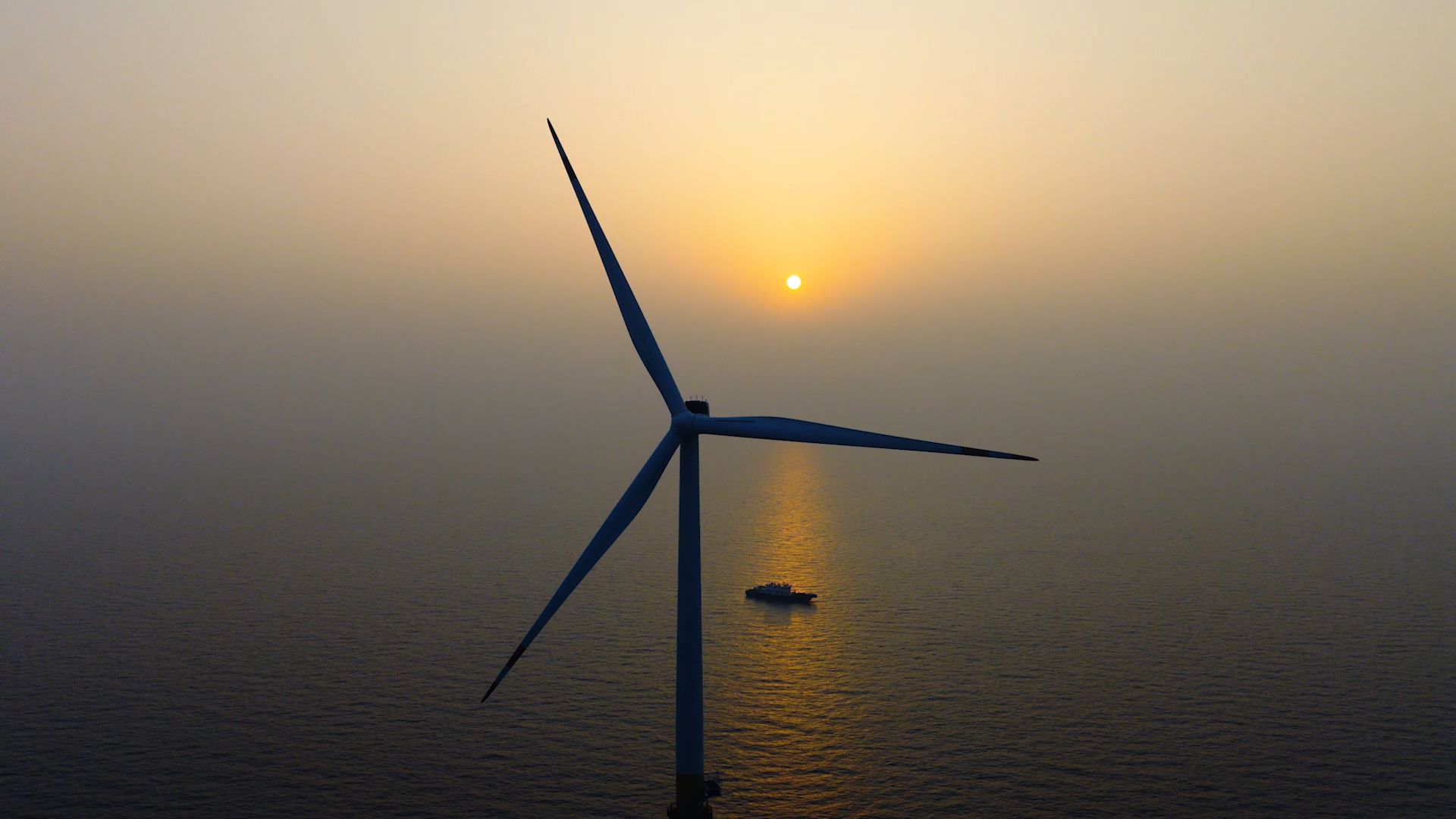
CGTN's Wang Tianyu traveled 80 kilometers off the coast of eastern China to visit an offshore wind farm.
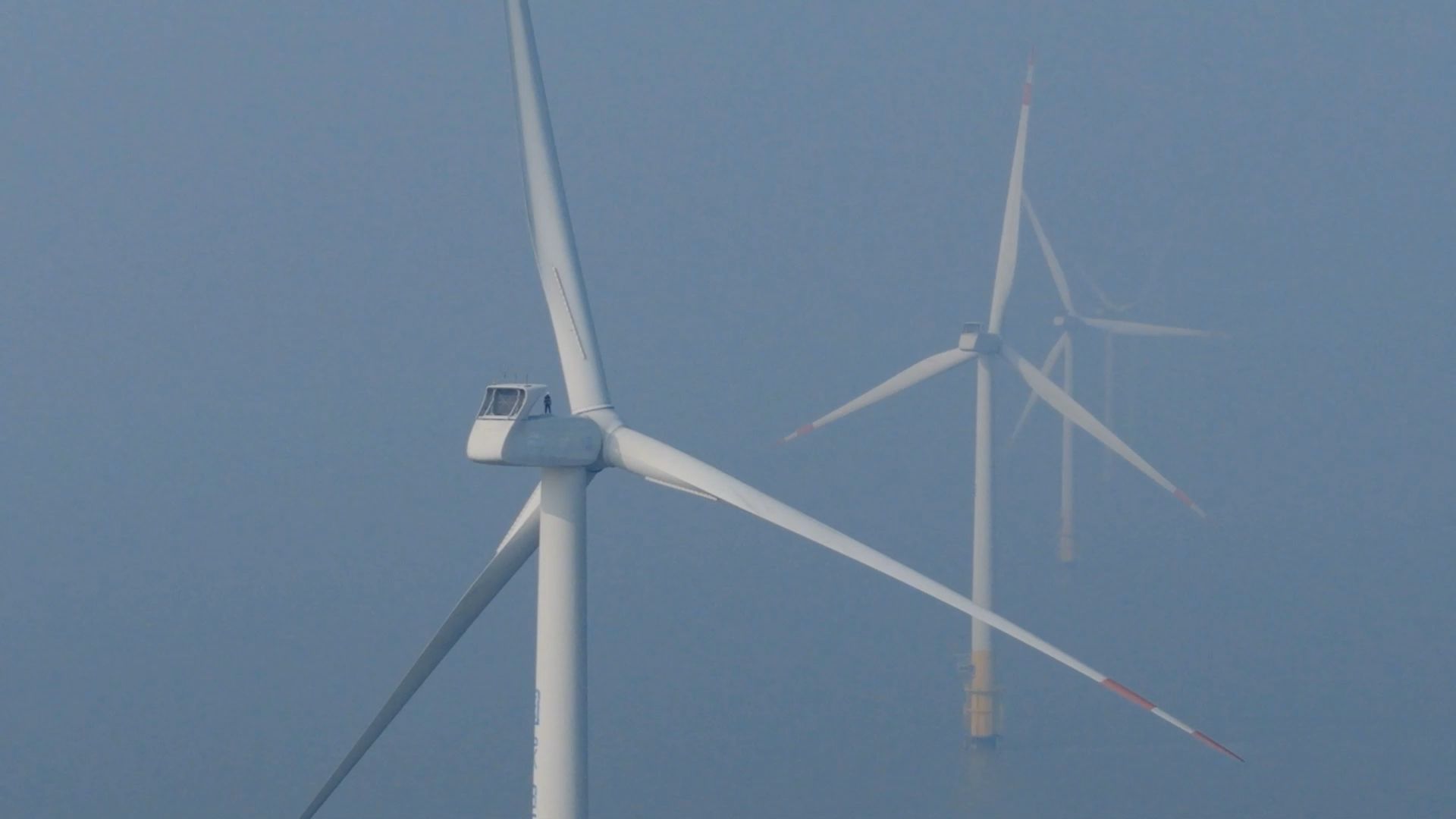
For most people, the closest they'll get to a wind turbine is watching them from ground level, perhaps from afar on the shore. But Tianyu got the full experience, taking the lift up inside the turbine's central tower before emerging at the top and going inside the turbine itself.
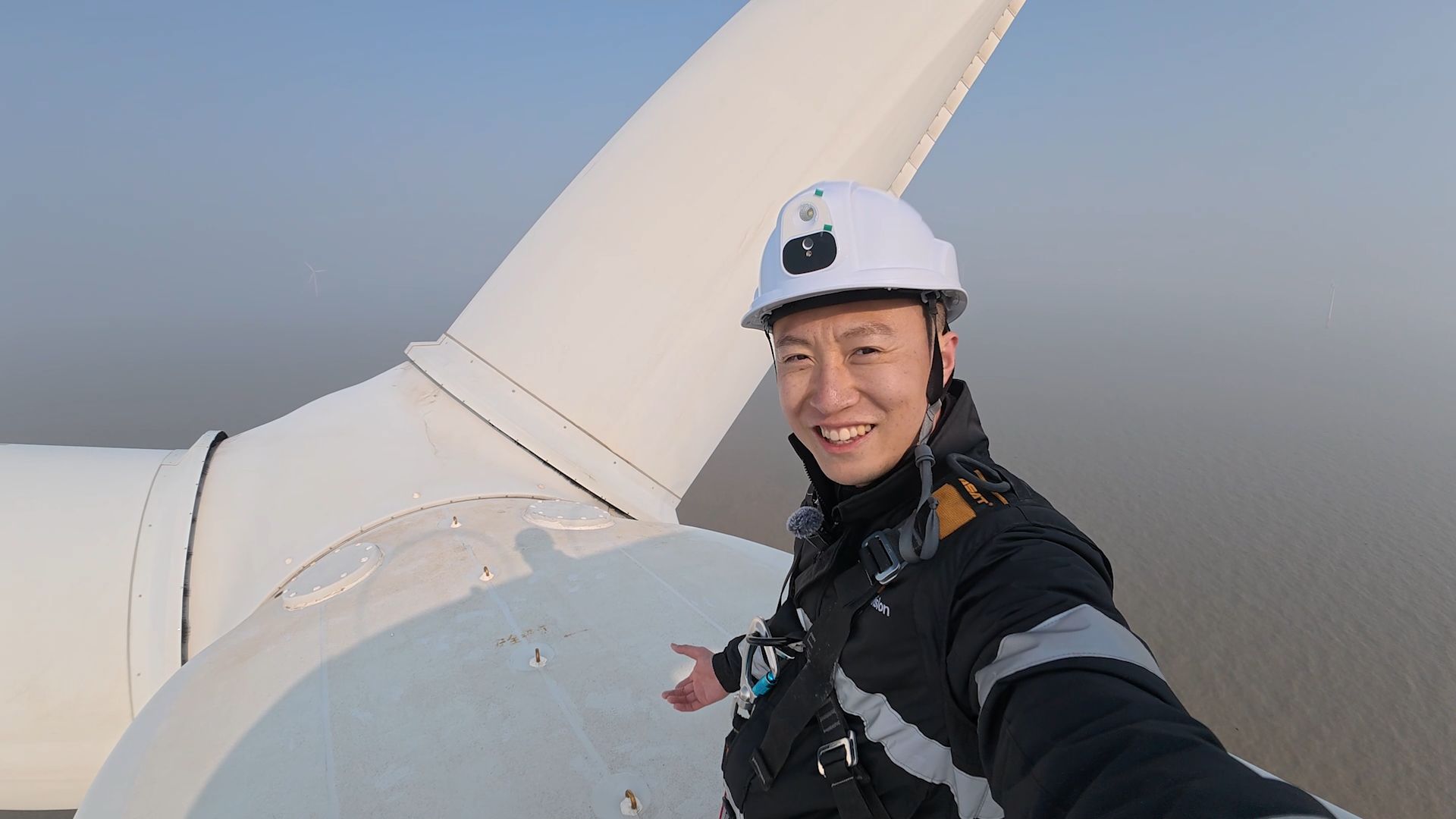
"I'm on top of a wind turbine – it's not easy to get here," he says. "Wooo, the view is stunning."
What's also stunning from close range is the sheer size of the turbine blades. Somewhat resembling a plane wing, they can stretch as long as a football field.
Chinese firm Envision has built some of the world's biggest blades – but with size can come difficulties. Certainly, it's not easy to install them in the sea, so preparation is critical.
"The hardest part of making the blades is that we have to make sure every step is done precisely," says Jiang Guanghui, Envision Energy's Assistant Manager of the Jiangyin Manufacturing Plant. "They should last more than 20 years."
"That's the beauty of the wind. It's an infinite supply of energy flow."
There are 72 wind turbines in this particular wind farm, generating millions of kilowatts hours of power each day for factories, electric vehicles or whatever else draws on the grid.
But offshore wind is only part of a much bigger picture, adding to the power from turbines across the country.
Wind turbines are a big deal in China. As well as being out at sea, you'll find them up on hills and in open fields — basically anywhere there's enough wind.
"That's the beauty of the wind," says Envision Founder and CEO Zhang Lei. "Once you have space, you are able to harvest wind energy… It's an infinite supply of energy flow."
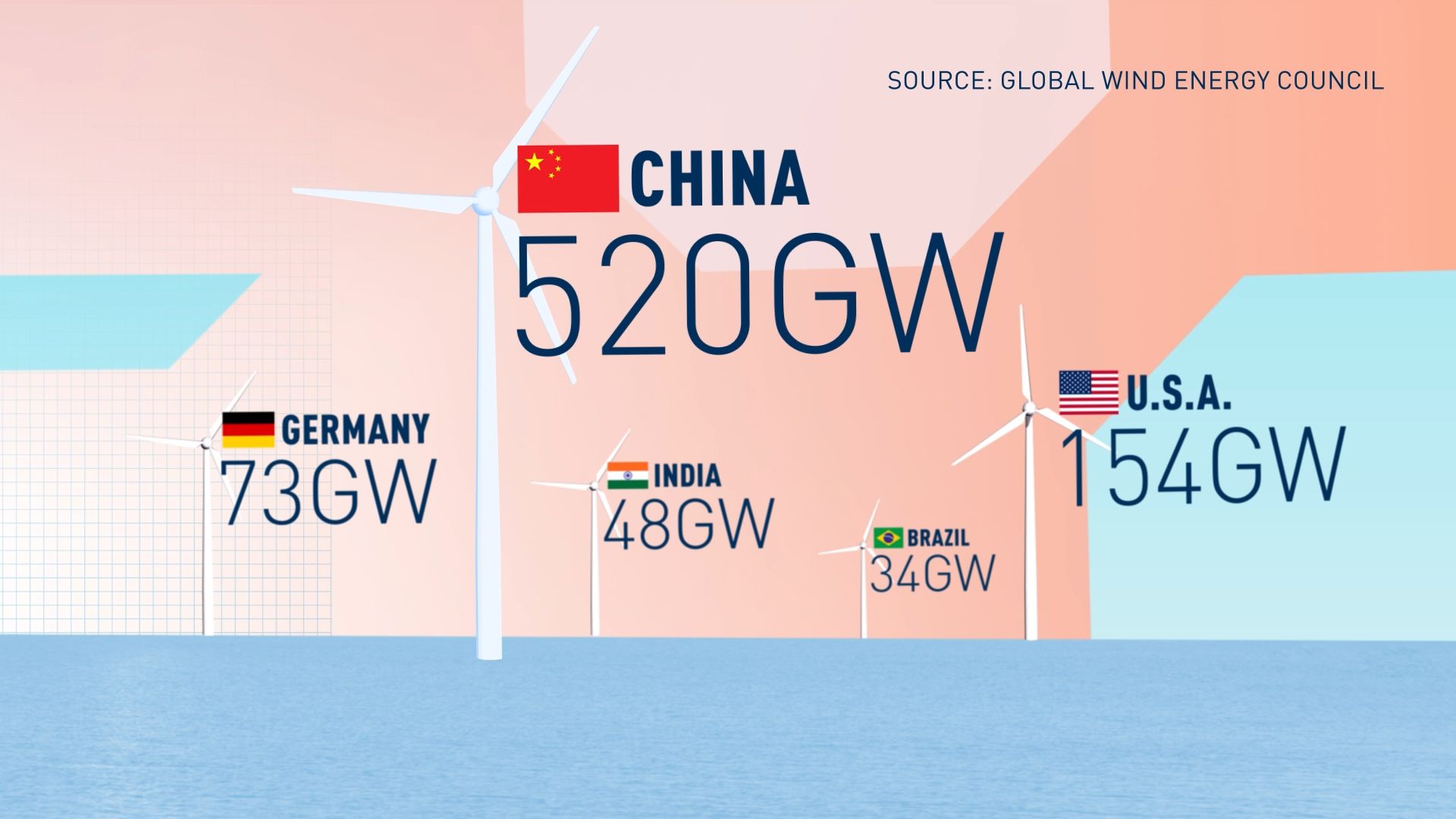
China has installed 520 Gigawatts of wind power — nearly half of the world's total. The United States ranks second, but its capacity is still less than one-third of China's. Germany, India and Brazil follow behind.
Europe chases the wind
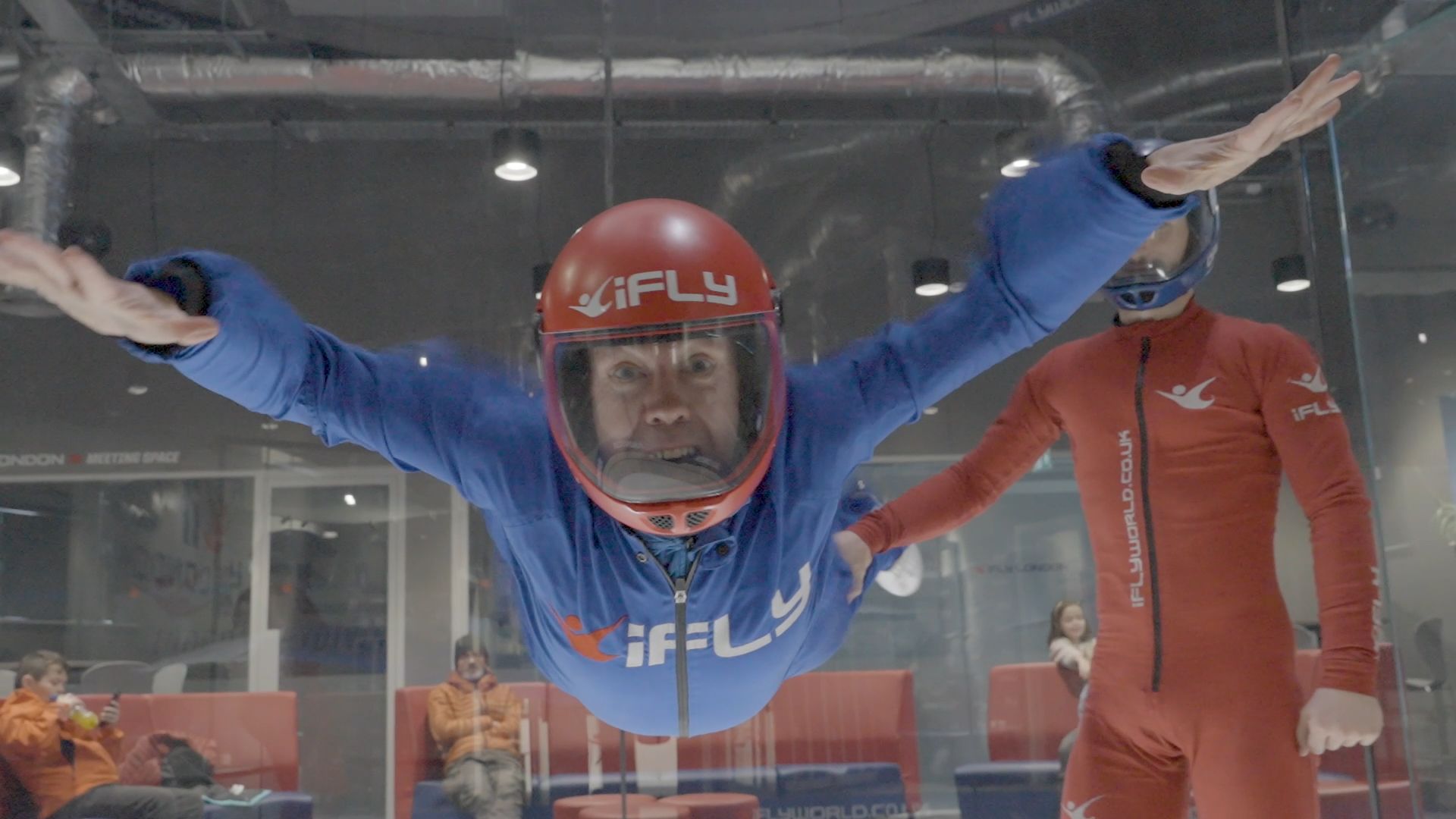
So China is in the lead – but there are signs that Europe is embracing wind power.... and not just when CGTN's Michael Marillier tries out a wind tunnel to test the strength of a near-200 km/h blast – the sort harnessed by some of the world's biggest turbines.
In the UK, the wind is producing more power than ever. In fact, the country now generates 29 percent of its electricity from the wind.
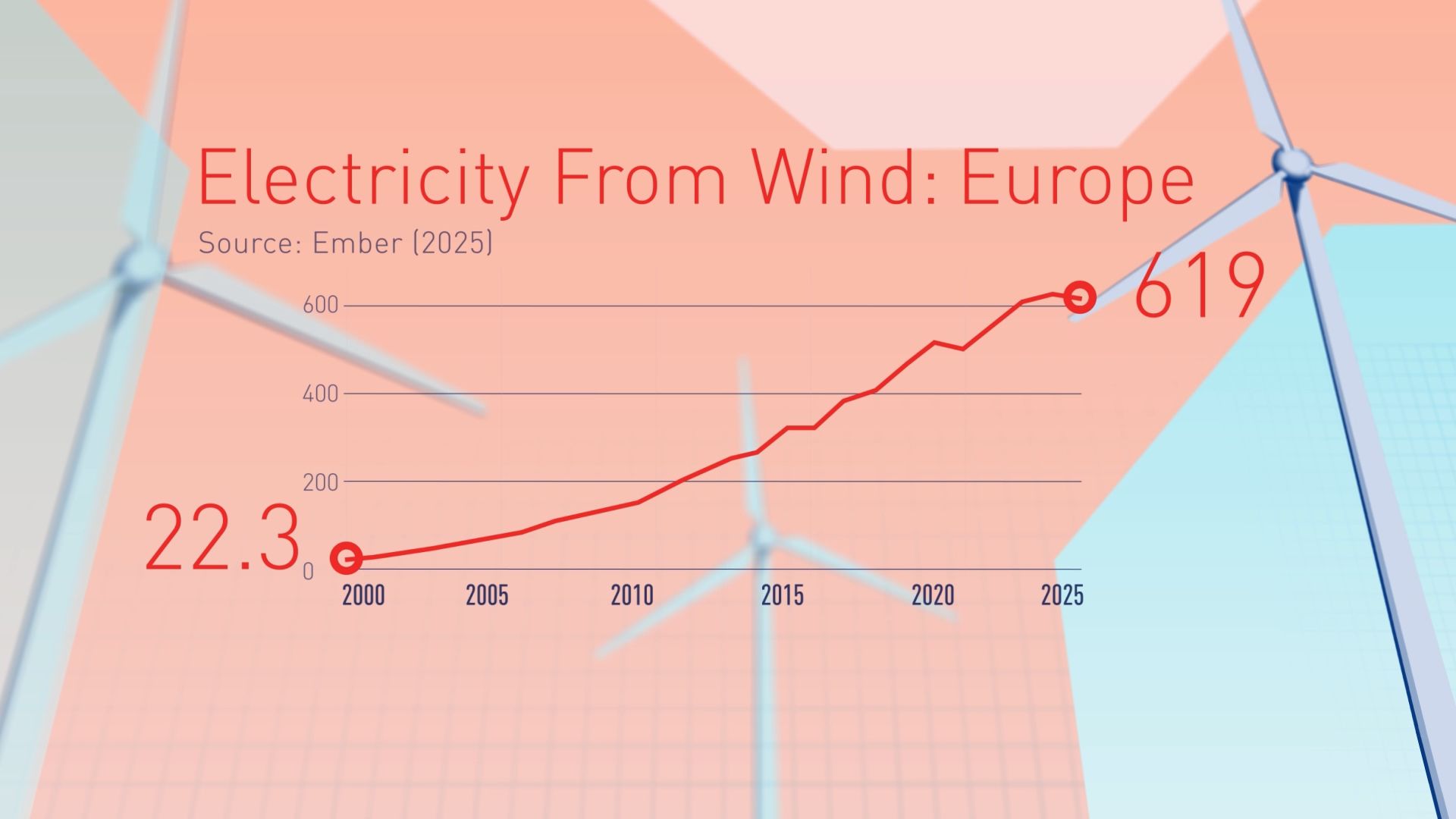
Meanwhile, the numbers have been climbing across Europe. The amount of electricity produced by wind power is nearly 30 times higher than it was in the early 2000s.
But there's a problem – the wind doesn't blow all the time. That means the energy has to be stored in batteries, and most batteries only hold a small amount of power.
The solution could lie near Sunderland in northern England, where British firm Harmony Energy runs a battery storage system. It teamed up with Envision to build a system that can power 80,000 homes for about two hours.
"This will power between 1 and 2 million homes for 16 hours a day."
And that could be just the start. Envision says it's using AI to make its batteries more efficient, and more powerful.
"This will power between 1 and 2 million homes for 16 hours a day," says Kotub Uddin, Envision Energy's Chief Technology Officer. "The duration is much, much longer. We've got now the capability to power many homes for a longer time."
New heights
While experts in Europe are taking battery power to new lengths, scientists in China are taking turbine tech to new heights.
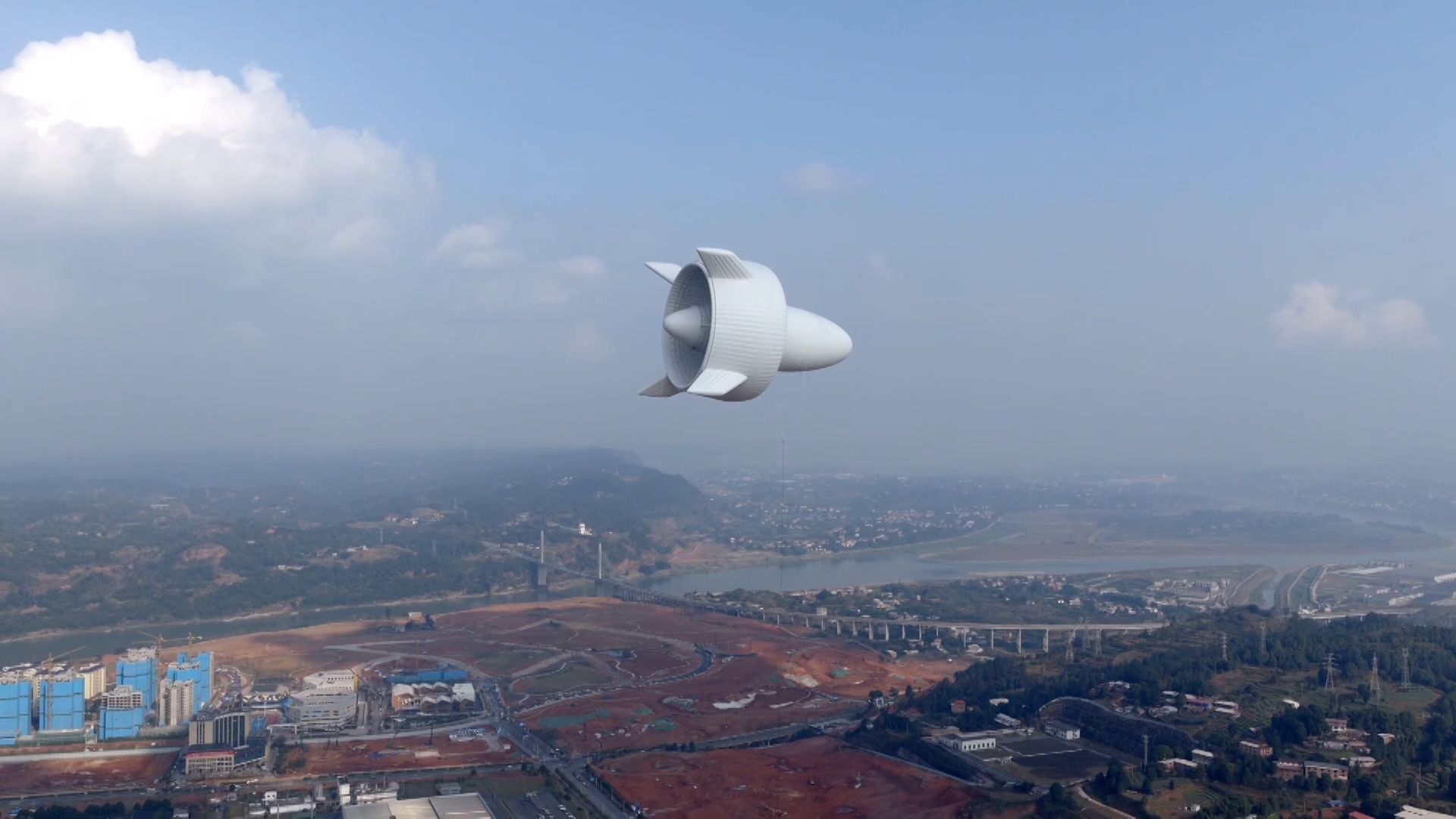
In January, a Chinese firm tested a turbine system that floats hundreds of meters in the air, generating power from higher-altitude winds which are often stronger than those near the ground.
It's a system that brings its own challenges – but it shows that enquiring minds are open to the possible future implementations of this ancient human impulse: catching the wind.
Future Mode
Reporters Michael Marillier, Wang Tianyu
Cameras Benji Croce, Murray Job, Han Peichen
Editors Thomas Triebel, Steve Chappell
Animation Alexander Shields, Omar Abusitta
Writer Gary Parkinson
Producers Quan Xiangqin, Ai Yan
Chief Editor Guo Chun